
Engineering Criteria for Selecting Industrial Granular Activated Carbon Manufacturers
Adsorption processes in municipal water treatment, petrochemical purification, and solvent recovery rely fundamentally on solid-phase matrix consistency. When evaluating granular activated carbon manufacturers, process engineers and procurement teams must look past basic product sheets to examine raw material chemistry, activation thermal profiles, and macro-kinetic properties. The efficacy of an entire filtration or remediation train hinges on physical parameters such as micropore-to-mesopore volume distributions, particle sphericity, hydraulic shear resistance, and apparent density.
Industrial adsorption media operates under dynamic hydrodynamic and chemical stress. Media attrition introduces operational disruptions, fines accumulation, premature head loss, and downstream fouling. Understanding how raw materials are converted into structured porous adsorbents enables technical buyers to forecast bed lifecycle costs, empty bed contact time (EBCT) margins, and reactivation viability accurately.
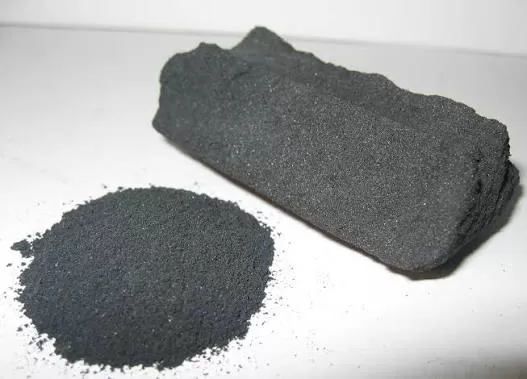
Raw Material Feedstock and Activation Dynamics
The performance profile of granular activated carbon (GAC) is dictated by the carbonaceous precursor and the thermal activation parameters chosen during primary manufacturing. Carbonization converts precursors into dense carbon matrixes by expelling volatile organics at temperatures between 400°C and 600°C. Subsequent activation occurs inside rotary kilns or multiple-hearth furnaces at temperatures ranging from 800°C to 1000°C under controlled atmospheres containing steam, carbon dioxide, or oxygen.
Industrial buyers work closely with granular activated carbon manufacturers to configure the appropriate base substrate depending on target adsorbate molecular dimensions:
Bituminous Coal: Possesses a natural distribution of both micropores (<2 nm) and mesopores (2 to 50 nm). The resulting structure provides mechanical rigidity, moderate bulk density, and balanced kinetics, making it effective for general-purpose drinking water clarification and trace organic compound stripping.
Sub-bituminous Coal and Anthracite: Offer dense packing beds with low initial porosity. These materials require intense gasification to open internal channels, yielding high-density adsorbents suited for heavy mechanical-abrasion liquid beds.
Coconut Shell: Characterized by high-density, highly crystalline graphitic domains that form predominant microporosity. It displays superior ball-pan hardness and provides high capacity for low-molecular-weight volatile organic compounds (VOCs), trihalomethanes (THMs), and residual oxidants such as free chlorine.
Lignocellulosic Biomass and Wood: Yields a dominant mesoporous and macroporous (>50 nm) architecture. This skeletal framework accelerates diffusion rates when sequestering large-diameter humic acids, complex dye molecules, or elevated molecular-weight tannins from biological wastewater effluents.
Technical teams, such as those at Nanfang, emphasize matching this structural pore architecture to the targeted molecular radius of target contaminants, ensuring that mass transfer zones remain narrow and dynamic adsorption capacity is fully maximized.
Critical Analytical Benchmarks and Standardized Metrics
Procurement specifications require rigorous verification against standard testing protocols (primarily ASTM). Analyzing these values in conjunction, rather than as isolated metrics, determines actual media capacity and bed hydrodynamic stability.
Pore Matrix Development Indicators
Internal surface area is primarily mapped using two baseline chemical adsorption tests: the Iodine Number (ASTM D4607) and Carbon Tetrachloride (CTC) Activity (ASTM D3467). An iodine value between 900 mg/g and 1150 mg/g indicates deep micropore propagation suitable for small-molecule liquid-phase retention. CTC activity, historically standard for vapor-phase media, correlates with micropore volume capable of capturing volatile organics; modern engineering frequently substitutes butane working capacity (ASTM D5228) to measure identical internal geometric volumes.
For applications removing industrial surfactants, color bodies, or natural organic matter (NOM), the Molasses Number or Methylene Blue Adsorption Value serves as the primary parameter. These indices reflect transitional mesopore abundance, which prevents internal pore blockage and allows complex adsorbates to diffuse into the deeper microporous matrix.
Mechanical Integrity and Physical Durability
Media integrity under continuous hydraulic downflow or upflow fluidization prevents premature system degradation. The Hardness Number or Ball-Pan Hardness (ASTM D3802) quantifies resistance to degradation caused by inter-particle abrasion during hydraulic transport, surface scraping, and high-rate backwashing. Values exceeding 90 to 95 percent are mandatory for deep-bed municipal filters to prevent carbon loss and downstream channel blinding.
The Abrasion Index provides complementary data by simulating hydrodynamic agitation. Lower structural resistance generates microscopic fines, escalating the rate of pressure drop across the contact bed and increasing the backwash frequency, which consumes process water and cuts uptime.
Density, Ash Composition, and Wetting Characteristics
Apparent Density (ASTM D2854) influences the mass of carbon that can be placed inside an adsorption vessel of set dimensions. Typical values range from 0.40 g/cm³ to 0.55 g/cm³. Variations in bulk density alter backwash expansion behavior and mass-based cost computations.
Total Ash Content (ASTM D2866) and acid-soluble ash fractions reflect mineral residues such as silica, alumina, iron, calcium, and magnesium. Elevated acid-soluble iron can leach into treated water, catalytically breaking down oxidants or discoloring low-pH permeates. Silica residues lower total accessible internal surface per unit volume, which can reduce total adsorption yield. Acid-washed carbons are therefore specified for high-purity pharmaceutical processing, semiconductor rinsing, and delicate catalyst support beds.
Hydrodynamic Design Parameters in Fixed-Bed Applications
Distinguishing premier granular activated carbon manufacturers from commodity distributors involves assessing their capacity to support fluid dynamic modeling and bed configuration. The mechanical layout of adsorbers requires balancing contact time against pressure loss.
Hydraulic Loading and Empty Bed Contact Time (EBCT)
Empty Bed Contact Time dictates the physical volume of activated media through which the process fluid migrates relative to volumetric flow rates:
EBCT = V / Q
Where V represents the media volume and Q denotes the volumetric fluid flow rate. In drinking water systems removing micropollutants (such as per- and polyfluoroalkyl substances, or PFAS), EBCT values are generally sized between 10 and 20 minutes to accommodate broad mass transfer zones. Lower EBCT configurations (5 to 8 minutes) suffice for baseline de-chlorination due to the rapid catalytic reaction kinetics involved in converting hypochlorous acid to chloride ions.
Superficial linear velocity (hydraulic loading rate) must be balanced to prevent structural bypass channeling. Liquid-phase systems standardly run between 5 and 15 m/h. Operating below this threshold risks poor flow distribution, whereas operating above it increases head loss across the gravel and underdrain support plates.
Pressure Drop Prediction and Effective Particle Sizing
The operational pressure drop per unit depth of carbon media is governed by fluid viscosity, bed void fraction, flow velocity, and particle geometry. This relationship is modeled using the Ergun equation for fluid flow through packed beds. Particle sizing is designated through standard mesh fractions (e.g., 8x30 US Mesh, 12x40 US Mesh, 20x50 US Mesh):
Effective Size (D10): The sieve aperture size that passes 10 percent of the total media mass. A higher D10 mitigates hydraulic head loss under high flow conditions.
Uniformity Coefficient (UC): The ratio of D60 to D10. Granular media with a UC below 1.4 to 1.6 maintains uniform void space, reducing interstitial compaction, stratification anomalies, and premature localized breakthrough.
Mean Particle Diameter (MPD): Dictates the external surface area per unit volume. Smaller MPD sizes (e.g., 20x50 mesh) reduce intraparticle diffusion lengths, producing faster uptake kinetics at the expense of higher clean-bed head loss.
Specialized producers like Nanfang employ rigorous ASTM testing protocols to verify that sieve classifications maintain tight standard deviations, preventing fines from accumulating in the lower reaches of filtration underdrains.
Application-Specific Demands and Performance Criteria
Material specifications vary considerably across process types, demanding tailored raw material selection and pore sizing.
Municipal Potable Water Clarification
Water utilities face stringent thresholds for halogenated byproducts, taste and odor compounds (geosmin and 2-methylisoborneol), and persistent trace organics. In these settings, GAC must balance robust transport mesopores with concentrated micropores. The media must resist hydraulic thermal variations and endure routine seasonal backwashing without excessive physical attrition or fines generation.
Gas-Phase Adsorption and Solvent Recovery
Vapor-phase applications focus heavily on low pressure drop, deep contaminant loading, and predictable thermal regeneration loops. When capturing VOCs, chlorinated solvents, or paint exhaust components, pellets or large-mesh granular media (e.g., 4x8 mesh or 4 mm extrudates) are deployed. Key design parameters center on high CTC, low moisture retention, and high auto-ignition resistance, which avoids bed fires during exothermic adsorption cycles.
Industrial Effluent and Recycled Water Treatment
Tertiary industrial wastewater polishing involves complex multi-component matrices laden with organic chemical oxygen demand (COD), surfactants, heavy metal chelates, and residual biocides. Competitive adsorption governs bed performance, as background natural organics saturate large outer pores. Effective media requires expansive mesoporosity to prevent skin-blinding, alongside balanced surface chemistry that can accommodate physical adsorption and mild bio-regeneration (Biological Activated Carbon, or BAC).
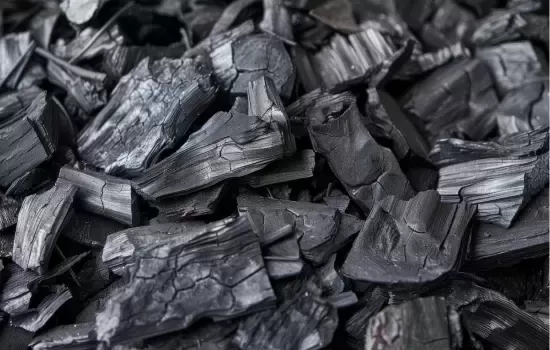
Supply Chain Evaluation and Manufacturing Consistency
Vetting granular activated carbon manufacturers requires evaluating not only batch analytical certificates, but also thermal reactivation controls, kiln operations, and raw feedstock sourcing. Disruptions in coal supply or regional coconut harvest swings can compromise base matrix properties unless the producer maintains strict material homogenization processes.
Plant audits should examine the degree of quality management applied across every processing phase:
Pre-carbonization crushing and sorting, ensuring consistent particle size distribution entering the furnace.
Continuous atmosphere and temperature regulation within thermal activation furnaces to avoid over-oxidized cores or under-activated hulls.
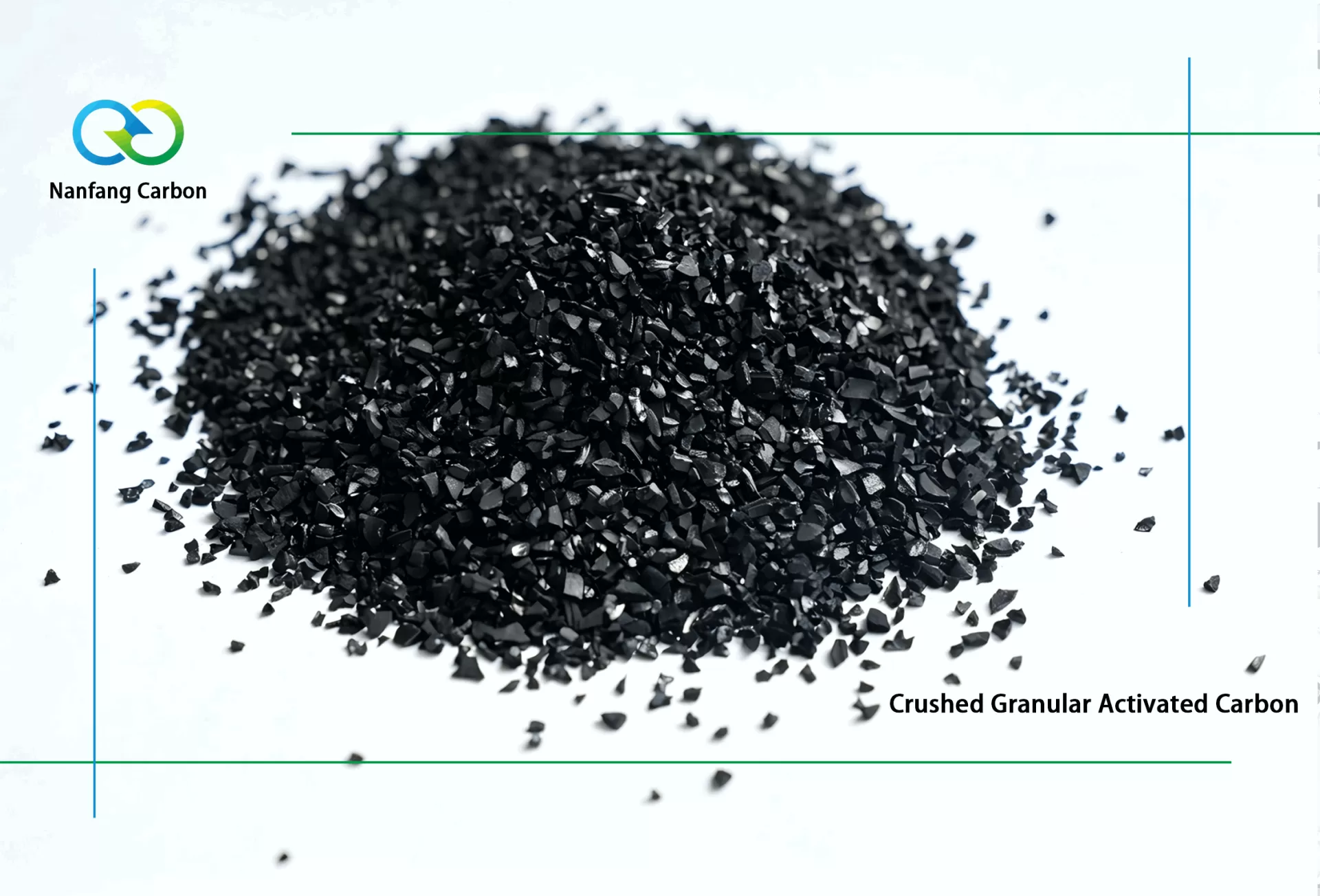
Post-activation sorting, magnetic screening for iron contaminants, destoning, and multi-deck dedusting.
Custom surface chemical modification capabilities, including acid washing to eliminate mineral salts, or catalytic functionalization through nitrogen dosing to accelerate oxidant breakdown.
Experienced granular activated carbon manufacturers often assist plant operators in calculating mass transfer zones, fluid bed expansion curves, and carbon exhaustion rates based on pilot column data or isothermal adsorption analyses. Through tailored mesh distributions and engineered backwash protocols, Nanfang provides dynamic technical guidance to help processing plants select the appropriate media configuration for their specific operating conditions.
Installation, Wetting, and Operational Maintenance
Optimal media selection does not prevent premature breakthrough if commissioning and ongoing maintenance procedures are flawed. The initial installation of GAC into an adsorption vessel dictates its baseline operational efficiency.
Hydraulic Loading and Deaeration
Direct mechanical dropping of dry carbon into empty adsorbers causes particle shattering and structural degradation. Tanks should be partially filled with clean, deaerated water to cushion incoming material. Dry carbon contains trapped atmospheric gas within its porous matrix. If water is introduced too rapidly from above, internal buoyancy causes bed stratification, gas binding, and channel flow.
Proper wetting protocols require soaking the loaded carbon bed for 24 to 72 hours. Submerged soaking displaces air within the deepest micropores. Following initial soaking, a gentle upflow backwash should be initiated to purge dislodged micro-bubbles and wash out trace shipping fines before placing the system into downstream production.
Backwashing and Bed Stratification
Over operational cycles, suspended solids accumulate within the upper layers of the carbon bed, causing gradual head loss. Backwashing reverses fluid flow upward to fluidize the media, scour accumulated particulates, and re-stratify the bed.
The backwash velocity must achieve a bed expansion between 20 and 30 percent without washing functional media into the discharge troughs. Because water density and viscosity fluctuate with operating temperature, backwash flow rates must be adjusted seasonally. Warmer summer water, being less viscous, requires higher superficial velocities to achieve identical hydrodynamic drag and bed expansion compared to cold winter processing streams.
Frequently Asked Questions
Q1: What differentiates virgin granular activated carbon from reactivated carbon?
A1: Virgin granular activated carbon is manufactured directly from fresh raw precursors (such as coconut shells or virgin coal) that have never been exposed to industrial contaminants. Reactivated carbon is generated by thermally processing spent carbon inside high-temperature kilns to burn off adsorbed organics and restore porous structure. While reactivated carbon offers a lower unit price and reduces lifecycle carbon emissions, it typically exhibits a lower Iodine Number, a higher ash fraction, reduced mechanical hardness, and a wider pore distribution due to structural mass loss during re-activation.
Q2: How does the Iodine Number correlate with organic removal efficacy?
A2: The Iodine Number measures the milligrams of elemental iodine adsorbed per gram of carbon in a dilute aqueous solution, providing an approximation of total internal surface area contributed by pores sized between 1.0 and 2.8 nanometers. A high Iodine Number indicates superior capacity for low-molecular-weight trace organic compounds. However, it does not correlate with the removal of large-molecule contaminants like humic acids or long-chain polymers, which require a developed mesopore matrix reflected by Molasses or Methylene Blue numbers.
Q3: What causes pressure drop to rise rapidly in a newly commissioned carbon vessel?
A3: Rapid pressure drop escalation in a newly commissioned bed typically results from insufficient pre-soaking, incomplete air de-gassing, inadequate removal of fine particulates during the initial backwash, or improper particle sizing. If the Uniformity Coefficient is too high, smaller carbon grains settle into interstitial voids between larger granules, choking flow channels. Air entrapment within the bed matrix can also cause severe gas binding, forcing the fluid through narrow bypass channels and raising operational pressure differentials.
Q4: How should Empty Bed Contact Time (EBCT) be adjusted for PFAS removal?
A4: PFAS molecules, particularly short-chain perfluoroalkyl acids, exhibit lower adsorption affinity and slower internal diffusion than longer-chain varieties like PFOS and PFOA. While conventional volatile chemical treatment may operate efficiently at an EBCT of 10 minutes, comprehensive PFAS removal designs typically demand contact times between 13 and 20 minutes to prevent premature breakthrough. Utilizing two or more vessels arranged in a lead-lag configuration ensures that the primary vessel can reach complete exhaustion while the secondary bed captures advancing contaminant fronts.
Q5: Can ash content within granular activated carbon impact liquid-phase process chemistry?
A5: Yes. Residual inorganic ash consists of basic oxides, silicates, and metal salts that can dissociate into solution upon initial wetting, driving process water pH up to basic levels (often between pH 8.5 and 10.5). In drinking water or boiler-feed systems, this can lead to scaling or water quality regulatory non-compliance. In chemical process lines, heavy metal components such as iron or copper in the ash can catalyze undesirable side-reactions or foul downstream membrane systems. Acid-washed grades mitigate these risks by stripping out soluble ash constituents prior to packaging.
Industrial Media Sourcing and Technical Specifications
Achieving predictable run times in fixed-bed and mobile adsorption systems requires tight alignment between process specifications, hydraulic design, and manufacturing tolerances. Consulting technical teams at granular activated carbon manufacturers ensures optimal media lifecycle performance.
For custom pore distribution modeling, comprehensive ASTM data sheets, or pilot-scale media evaluations tailored to your process matrices, connect with our industrial carbon engineering department: nkty87740956@163.com
.webp)