
Cylindrical Activated Carbon: Engineering Specs & Gas Phase Solutions
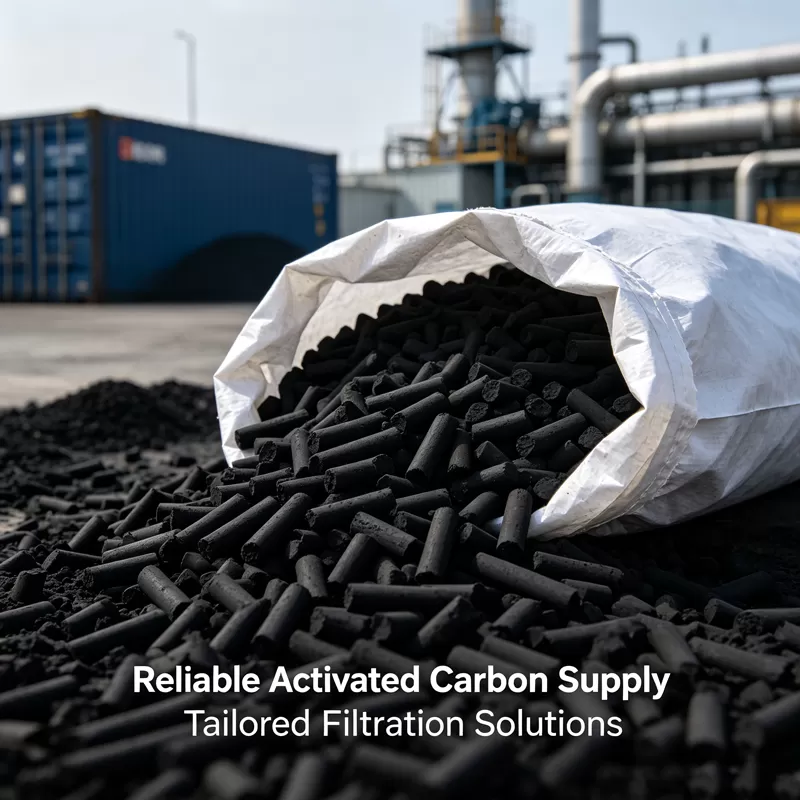
Industrial gas-phase remediation and solvent recovery processes require adsorbent media that balance high adsorption kinetics with minimal fluid resistance. Among engineered adsorbents, cylindrical activated carbon has become the benchmark solution for continuous-flow air purification, volatile organic compound (VOC) abatement, and catalyst support. Derived primarily from high-grade anthracite, bituminous coal, or selected lignocellulosic materials, these extruded pellets provide predictable hydrodynamic behavior, robust mechanical integrity, and custom pore architectures designed for mass transfer efficiency.
Selecting the correct adsorbent requires evaluating raw material matrices, activation methods, mechanical durability, and geometric configurations. System engineers and procurement managers must balance volatile load factors against operational expenditures, particularly electrical power consumption driven by blower resistance. This technical evaluation addresses the mechanical, physical, and chemical parameters governing pelletized media performance in demanding industrial settings.
Extrusion Manufacturing and Pore Development
The manufacturing process of pelletized adsorbents begins with the pulverization of base carbon sources to a precise particle size distribution, typically under 45 microns. This fine carbon powder is uniformly blended with specialized plasticizers and binders, such as coal tar, petroleum pitch, or synthetic organic polymers. The homogeneous paste is subsequently forced through hardened steel dies under hydraulic extrusion pressures ranging from 15 to 35 MPa, forming continuous cylindrical strands that are cut to designated length-to-diameter ratios.
Thermal processing follows two distinct stages:
Carbonization: The extruded green pellets undergo pyrolytic treatment in an oxygen-depleted rotary kiln at temperatures between 500°C and 700°C. This step eliminates volatile non-carbon matter, carbonizes the organic binder, and creates the foundational solid skeleton.
High-Temperature Steam Activation: Carbonized pellets enter directly heated activation kilns at 850°C to 950°C. Regulated injections of steam and carbon dioxide initiate controlled endothermic gasification reactions:
C + H2O → CO + H2
C + CO2 → 2CO
This selective internal etching creates a trimodal pore structure. Macropores (diameters exceeding 50 nm) act as distribution conduits through the outer perimeter of the pellet. Mesopores (2 to 50 nm) facilitate the transport of organic molecules toward the interior core. Micropores (under 2 nm) provide the vast majority of active surface area, routinely achieving values between 900 m²/g and 1200 m²/g, where classical physical adsorption occurs through London dispersion forces.
Fluid Mechanics and Pressure Drop Across Packed Beds
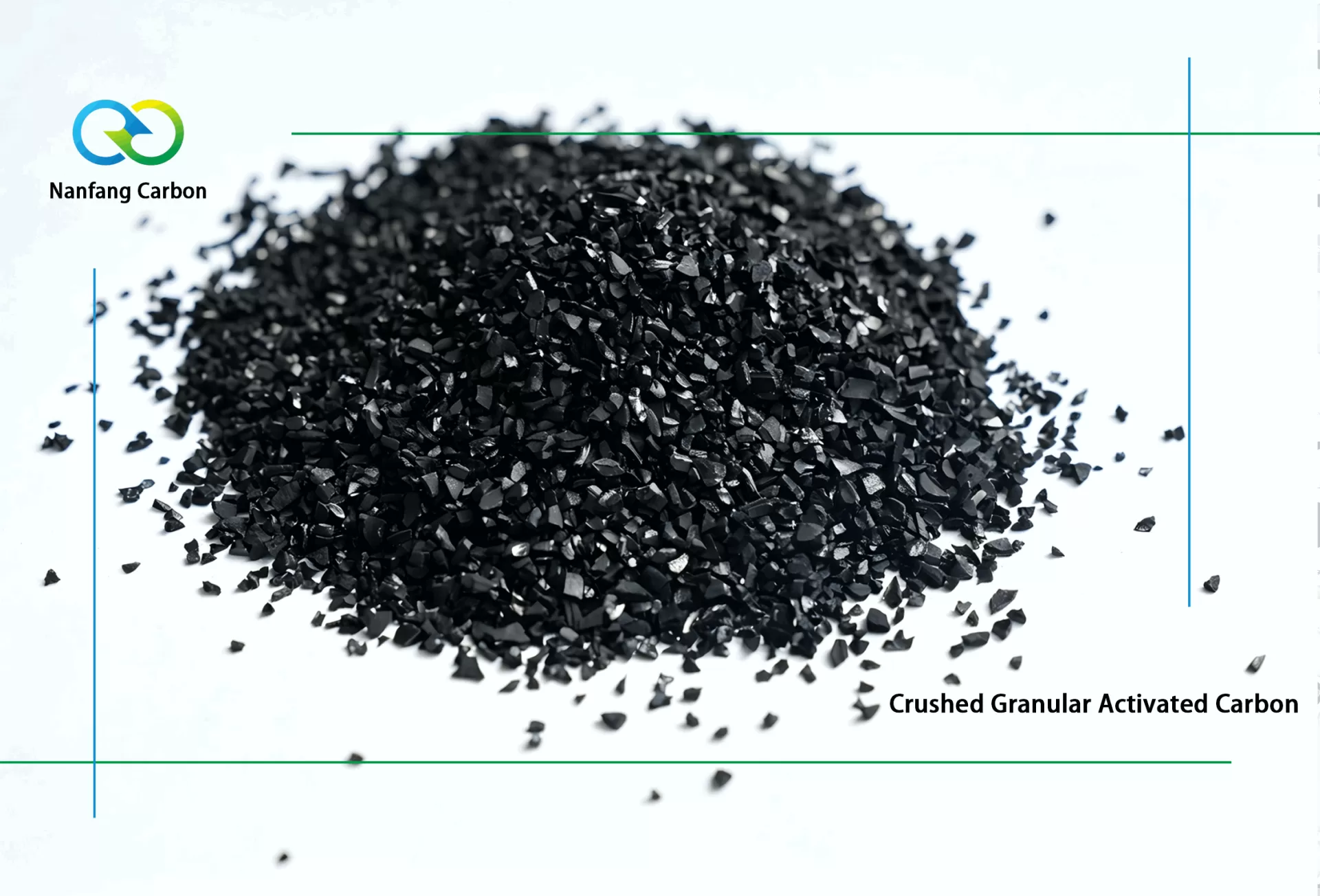
The geometric regularity of cylindrical activated carbon provides a distinct hydraulic advantage over irregularly shaped granular activated carbon (GAC). In large fixed-bed reactors, packed beds composed of irregular granules experience random bridging, inconsistent void distributions, and localized compacting. These inconsistencies generate uneven resistance, leading to gas channeling where high-velocity flow streams bypass under-utilized regions of the bed, precipitating premature contaminant breakthrough.
Extruded pellets generate a uniform bed voidage fraction, consistently falling between 0.40 and 0.45. This geometric consistency can be modeled using the modified Ergun equation for fluid flow through packed beds:
ΔP / L = 150 × [μ (1 - ε)² / (dp² ε³)] × v + 1.75 × [ρ (1 - ε) / (dp ε³)] × v²
Where ΔP represents the pressure differential across bed depth L, μ is the dynamic gas viscosity, ε represents the inter-pellet bed voidage, ρ is fluid density, v is superficial gas velocity, and dp is the equivalent spherical diameter of the cylinder. Because the pressure drop scales inversely with the square of the equivalent particle diameter at laminar velocities, selecting an appropriate pellet diameter (typically 1.5 mm, 2.0 mm, 3.0 mm, 4.0 mm, or 8.0 mm) is the primary method for managing total system head loss.
Lower pressure drops directly reduce electric blower power consumption over continuous multi-year operational cycles. In high-volume flows such as paint-spray booth ventilation or municipal odor control, where volumetric rates exceed 50,000 m³/h, utilizing 4.0 mm or 8.0 mm cylindrical activated carbon maintains static pressure losses well within economic operating parameters, preventing system overheating and mechanical motor strain.
Physical and Chemical Characterization Parameters
Procurement specifications for gas-phase adsorbents must account for both structural endurance and equilibrium adsorption capacities. Assessing these values using standardized testing methodologies avoids premature bed replacement and operational failure.
Carbon Tetrachloride Activity (CTC): Governed by ASTM D3467, CTC testing measures the saturated vapor adsorption capacity of the media, serving as an index of micropore volume within the 0.5 to 1.5 nm range. Commercial gas-phase grades typically exhibit CTC ratings from 50% to 85%.
Butane Working Capacity (BWC): Standardized under ASTM D5228, BWC quantifies the dynamic mass of butane retained and subsequently desorbed under purge conditions, serving as a reliable benchmark for regenerable solvent recovery operations.
Ball-Pan Hardness / Abrasion Number: Tested according to ASTM D3802, this metric identifies resistance to attrition and degradation caused by mechanical vibration, pneumatic filling shock, and structural settling. High-quality media consistently registers hardness levels of 95% or higher to avoid dust generation that blind downstream filters.
Apparent Bulk Density: Ranging from 380 g/L to 550 g/L depending on raw coal selections and the depth of thermal activation. Lower densities typically correspond to higher developed pore volumes, while higher densities offer greater volumetric adsorption capacity and mechanical endurance.
Ash and Volatile Content: Inherent mineral matter (silicates, iron oxides, aluminates) occupies critical mass without contributing to active adsorption. Premium coal-based pellets maintain total ash content under 8% to 12% by weight, minimizing catalytic side reactions during solvent desorption.
When target waste streams contain volatile acids, basic amines, or low-molecular-weight sulfur compounds, non-impregnated carbons exhibit limited physical adsorption capacity due to low boiling points and minimal molecular polarity. Engineers at Nanfang address this by applying functional surface chemical impregnations. Imparting basic reagents such as potassium hydroxide (KOH) or sodium hydroxide (NaOH) promotes stoichiometric neutralization of hydrogen sulfide (H2S), sulfur dioxide (SO2), and chlorine gases. Conversely, transition metal impregnants such as copper oxides or potassium iodide (KI) promote targeted catalytic oxidation on internal pore surfaces.
Industrial Gas Treatment Applications
The balance of low flow resistance, thermal stability, and mechanical strength makes cylindrical activated carbon the industry standard across several demanding air treatment environments.
Industrial VOC Capture and Solvent Recovery
Coating lines, gravure printing plants, and chemical synthesis installations discharge high-velocity exhaust air containing benzene, toluene, xylene, ethyl acetate, and methyl ethyl ketone (MEK). In continuous adsorption beds, the media isolates these compounds down to sub-part-per-million emission thresholds. During the desorption phase, superheated steam (120°C to 140°C) or hot inert nitrogen is passed counter-currently through the carbon matrix to boil off and recover concentrated organic solvents for distillation, without degrading the carbon's physical pellet geometry.
Biogas Conditioning and Siloxane Removal
Biogas produced from anaerobic digestion and municipal landfill extraction contains high moisture, methane, carbon dioxide, trace hydrogen sulfide, and volatile methyl siloxanes (D4, D5, D6). When unconditioned biogas fuels internal combustion engines or microturbines, siloxanes convert into abrasive microcrystalline silicon dioxide (SiO2), which scores cylinder liners and fouls heat exchangers. Packed beds of 3.0 mm or 4.0 mm extruded carbon trap siloxanes down to non-detectable levels, protecting combined heat and power (CHP) installations from catastrophic wear.
Tank Vent Emissions and Pressure Equalization
Bulk liquid storage tanks experience thermal breathing cycles, expelling VOC vapors as internal temperatures climb during daylight hours and drawing in ambient air at night. Vent filters packed with extruded pellets capture discharged hydrocarbons passively, handling variable, surging flow rates without over-pressuring storage vessel relief systems.
Adsorption Column Sizing and Dynamic Mass Transfer
Designing dynamic adsorption vessels requires determining the Mass Transfer Zone (MTZ). When process gas enters a clean carbon bed, contaminant removal occurs within a defined longitudinal segment of the bed. As the upstream carbon saturates, this mass transfer zone migrates downstream toward the vessel outlet.
The geometry of the vessel must ensure that the superficial gas velocity remains within target limits, typically 0.2 m/s to 0.5 m/s for low-concentration VOC streams, to preserve sufficient empty bed contact time (EBCT):
EBCT = Vbed / Q
Where Vbed represents the packed carbon volume and Q represents the volumetric flow rate. Standard industrial applications require an EBCT between 1.0 and 4.0 seconds, depending on the dynamic adsorption isotherm of the target contaminants and relative humidity levels.
Process streams with relative humidity (RH) exceeding 70% present competitive adsorption challenges. Water vapor molecules rapidly condense inside micropores smaller than 1.5 nm via capillary condensation, blocking active sites intended for non-polar volatile organics. Installing upstream dehumidification systems, including desiccant wheels or thermal heating coils to elevate gas temperature by 5°C to 10°C, lowers the inlet RH below 60% and preserves the dynamic capacity of the cylindrical activated carbon matrix.
Bed Packing Protocols and Preventative Maintenance
Operational failures such as premature breakthrough, localized hot spots, or excessive dust blowback can often be traced directly to improper loading techniques rather than media quality defects. Adhering to structured bed-packing protocols maintains design aerodynamics and operational safety.
During installation, direct dumping from discharge hoppers creates free-fall impact drops exceeding two meters, fracturing pellets into fine particulate matter and packing the center of the vessel more densely than the perimeter. Using anti-attrition sock loaders or sequential canvas chutes reduces drop velocity. Distributing the pellets with a radial spreader ensures an even surface profile and homogeneous packing density throughout the vessel cross-section.
Prior to initial process gas exposure, the packed system must undergo dust clearing and thermal stabilization:
Pneumatic purging with filtered air at 30% of standard flow removes loose transport dust, routing it into a collection system to prevent blinding downstream particulate filters.
Instrumentation checks must verify that multi-point resistance temperature detectors (RTDs) and differential pressure transmitters are functioning. Carbon-adsorbed ketones and aldehydes are prone to exothermic auto-oxidation reactions, which can cause localized smoldering. Thermal monitoring coupled with automated nitrogen-blanket injection lines protects against bed fires.
When integrating media into unconventional gas processing vessels, consulting with process specialists at Nanfang ensures bed depth calculations account for inlet velocity profiles, structural support grid spans, and bottom screen mesh sizes. Retaining screens must be sized to 70% of the minimum pellet diameter to prevent migration into process piping.
Frequently Asked Questions
Q1: Why is cylindrical activated carbon preferred over granular
activated carbon in gas-phase systems?
A1: Cylindrical pellets offer
uniform geometry and higher structural void fractions, which keeps pressure
drops lower and more predictable than irregularly shaped granular carbons. This
structural uniformity prevents gas channeling across the packed bed and provides
superior mechanical hardness, minimizing attrition dust generated by gas
pulsations.
Q2: How does pellet diameter influence adsorption kinetics versus
system pressure drop?
A2: Smaller diameter pellets (such as 1.5 mm
or 2.0 mm) offer shorter internal diffusion paths, accelerating adsorption
kinetics and narrowing the dynamic mass transfer zone. However, they create
higher resistance to airflow. Larger pellets (such as 4.0 mm or 8.0 mm) cut
static pressure drop significantly, making them ideal for high-velocity systems,
though they require a deeper overall bed to provide comparable contact time.
Q3: What relative humidity level is optimal for VOC capture using
extruded pellets?
A3: Relative humidity should ideally remain below
60% to 70%. When humidity exceeds 70%, moisture molecules undergo capillary
condensation within the carbon's micropores, actively competing with non-polar
VOC molecules and significantly degrading overall hydrocarbon adsorption
capacity.
Q4: Can spent pelletized carbon be regenerated on-site using thermal
desorption?
A4: Yes, provided the adsorbed contaminants are
low-to-medium boiling-point organic solvents. In-situ regeneration typically
uses inert nitrogen gas or superheated industrial steam cycled through the
vessel at 110°C to 160°C. Highly polymerized contaminants, organic acids, or
sulfur-impregnated media require off-site, high-temperature thermal reactivation
in specialized kilns.
Q5: How do impregnated cylindrical carbons target specific inorganic
gases like hydrogen sulfide?
A5: Standard virgin carbon relies
solely on physical adsorption, which is inefficient for small, polar inorganic
molecules like H2S. Chemical impregnation distributes basic compounds
like KOH or catalytically active salts across the inner pore structure. When the
gas flows through the bed, these reagents either neutralize the acid gas
directly or catalyze its oxidation into stable elemental sulfur, which remains
trapped inside the carbon pores.
Engineering Support and Media Specifications
Selecting the optimal cylindrical activated carbon grade requires assessing gas composition, flow rates, operating temperatures, and static pressure limits. Engineering teams seeking tailored bed modeling, pressure drop calculations, or custom impregnation formulations can contact the technical applications division at Nanfang for project-specific sizing and procurement data.
Direct technical inquiries and media specification requests: nkty87740956@163.com
.webp)