
Technical Guide to Shell Activated Carbon: Specifications, Performance, & Sourcing
In modern industrial process engineering, separation efficiency, operational longevity, and regulatory compliance depend heavily on adsorbent selection. Among the broad spectrum of carbonaceous media, shell activated carbon—predominantly synthesized from dense coconut shells and select nut matrices—has established itself as the benchmark adsorbent for micro-pollutant removal, gas purification, and precious metal recovery. Characterized by its predominant microporous matrix, high mechanical attrition resistance, and low ash content, this bio-based media offers clear technical and economic advantages over traditional fossil-derived carbons.
Process engineers, water treatment plant designers, and procurement managers require quantitative clarity on the physical chemistry, pore-size distribution, hydrodynamic behavior, and cost-of-ownership variables associated with shell activated carbon. This guide examines the manufacturing mechanisms, operational parameters, and rigorous evaluation metrics necessary to optimize industrial adsorption systems.
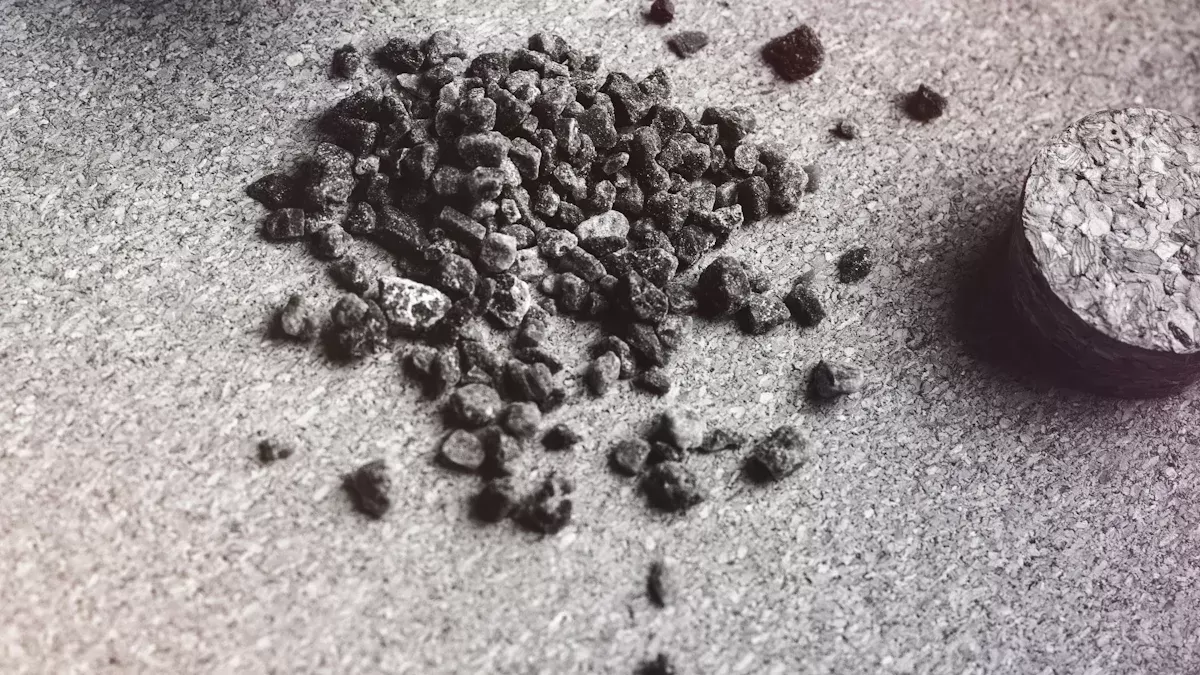
Material Science: Pore Structure and Activation Kinetics
The performance profile of activated carbon is dictated by its precursor precursor anatomy and the thermodynamic conditions of its activation. The dense, lignified cellular architecture of raw nut and coconut shells serves as the ideal framework for engineering a high-density, highly microporous adsorbent.
1. Carbonization (Pyrolysis) Dynamics
The manufacturing process begins with controlled slow pyrolysis of raw shells within rotary kilns or multi-hearth furnaces at temperatures ranging between 400°C and 600°C in an oxygen-depleted atmosphere. This thermal degradation drives off volatile organic matter, water vapor, and tar fractions, yielding an intermediate carbonaceous char. During this phase, the primary carbon matrix is formed, laying the baseline structural skeleton for subsequent pore enlargement.
2. High-Temperature Steam Activation
Unlike chemical activation routes commonly used for wood-based materials (which rely on phosphoric acid or zinc chloride), premium shell activated carbon is primarily produced via physical steam activation at temperatures between 800°C and 1050°C. The underlying endothermic reactions govern this process:
Water-Gas Reaction: C + H2O → CO + H2 (ΔH = +131.3 kJ/mol)
Boudouard Reaction: C + CO2 → 2CO (ΔH = +172.5 kJ/mol)
As superheated steam permeates the carbonized shell, it selectively oxidizes the most reactive carbon atoms within the char matrix. This selective gasification burns through the closed cell walls, opening up a dense network of sub-nanometer channels without collapsing the outer shell geometry.
3. Pore Size Distribution Matrix
Pore classification according to the International Union of Pure and Applied Chemistry (IUPAC) includes:
Micropores (Width < 2 nm): Represent 85% to 92% of the total internal surface area in high-grade shell activated carbon. These pores generate high Van der Waals adsorption forces, making them effective for trapping low-molecular-weight compounds, volatile organics, and trace contaminants.
Mesopores (Width 2 nm – 50 nm): Represent roughly 5% to 10% of the structure, functioning primarily as transport conduits that allow adsorbates to diffuse toward the inner micropores.
Macropores (Width > 50 nm): Serve strictly as entrance corridors for fluid flow into the carbon granule, contributing minimally to overall adsorption surface area.
Key Performance Metrics for Technical Procurement
Industrial specifications cannot rely solely on generic product titles. Precise ASTM test standards are required to determine whether a given batch of shell activated carbon will withstand bed shear, resist premature exhaustion, and satisfy hydraulic requirements.
| Technical Parameter | Standard Test Method | Typical Specification Range | Operational Significance |
|---|---|---|---|
| Iodine Number | ASTM D4607 | 950 – 1,300 mg/g | Measures micropore capacity (0.7 to 1.5 nm); primary indicator of overall adsorption capacity for small molecules. |
| Ball-Pan Hardness | ASTM D3802 | 97% – 99.5% | Measures resistance to mechanical attrition, crushing, and breakdown during backwashing and hydraulic transport. |
| Apparent (Bulk) Density | ASTM D2854 | 0.44 – 0.54 g/cm³ | Determines the mass of carbon required to fill a fixed-volume filter vessel; critical for bed loading calculations. |
| Total Ash Content | ASTM D2866 | 1.0% – 4.0% (Standard) < 0.5% (Acid-Washed) | Indicates inorganic content; low ash prevents process fluid contamination and minimizes initial rinsing requirements. |
| Abrasion Number | ASTM D4058 / AWWA | > 85 – 95 | Evaluates resistance to fines generation in continuous flow and fluidization conditions (critical in gold CIP/CIL circuits). |
| Moisture Content | ASTM D2867 | ≤ 3.0% – 5.0% | Quantifies unevaporated moisture as packed; higher values reduce active carbon mass per metric ton. |
For mission-critical applications such as semiconductor ultrapure water loops, pharmaceutical processing, and condensate polishing, Nanfang supplies high-purity, acid-washed shell activated carbon. Post-activation leaching using food-grade hydrochloric or hydrofluoric acid reduces residual acid-soluble minerals (iron, silica, calcium) to trace thresholds, stabilizing effluent pH and preventing secondary leaching.
Shell Activated Carbon vs. Coal-Based Carbon
Selecting between lignite/bituminous coal-based carbon and shell activated carbon requires balancing kinetic transport requirements, target adsorbate molecular weights, and environmental lifecycle targets.
| Feature / Parameter | Shell Activated Carbon (Coconut/Nut) | Bituminous Coal-Based Carbon |
|---|---|---|
| Primary Pore Structure | Predominantly Microporous (< 2 nm) | Bimodal / Mesoporous (2 – 50 nm) |
| Specific Surface Area (BET) | 1,050 – 1,400 m²/g | 850 – 1,050 m²/g |
| Target Adsorbates | VOCs, chlorine, THMs, PFAS/PFOS, small organics, radon | Color bodies, tannins, humic acids, large dyes, heavy metals |
| Mechanical Hardness | Very High (Hardness No. ≥ 98%) | Moderate (Hardness No. 85% – 92%) |
| Dust Generation / Fines | Minimal | Moderate to High |
| Thermal Reactivation Yield | High recovery (> 90%) with low attrition loss | Moderate recovery (75% – 85%); higher attrition loss |
| Carbon Footprint | Carbon-neutral closed-loop bio-waste origin | Fossil fuel extraction; high net lifecycle emissions |
While coal-based carbon retains a clear purpose in treating waters with high natural organic matter (NOM) or large color bodies, shell activated carbon is superior when capturing trace chemical contaminants present at parts-per-billion (ppb) and parts-per-trillion (ppt) concentrations.
Industrial Applications and Engineering Implementation
1. High-Purity Water Treatment & PFAS Remediation
Municipal water authorities and industrial manufacturing operations face stringent discharge limits for halogenated compounds, trihalomethanes (THMs), and per- and polyfluoroalkyl substances (PFAS). The tightly spaced micropore network of shell activated carbon provides high adsorption energy for short- and long-chain perfluorinated compounds (such as PFOA and PFOS). Its high internal surface area ensures maximum mass transfer efficiency within fixed-bed Granular Activated Carbon (GAC) systems.
2. Industrial VOC Abatement & Gas Separation
In fixed-bed solvent recovery systems and hazardous emission control units, shell activated carbon is utilized to trap low-boiling-point VOCs (such as benzene, toluene, xylenes, and chlorinated solvents). Due to its low bulk density variability and uniform particle sizing, it allows engineers to optimize packed-bed designs, maintaining effective adsorption capacity while avoiding excessive pressure drops across vapor-phase scrubbers.
3. Precious Metals Recovery (Gold Cyanidation: CIL, CIP, CIC)
In hydrometallurgical gold extraction circuits—including Carbon-in-Leach (CIL), Carbon-in-Pulp (CIP), and Carbon-in-Column (CIC)—the mechanical robustness of the adsorbent is critical. High hardness prevents granule breakage during high-shear slurry agitation, which directly reduces gold loss in trailing tailings screens. Nanfang manufactures specialized, high-attrition-resistant shell activated carbon with specific plate-edge rounding to optimize gold loading rates (kinetic rate constant k-value) and maximize final stripping efficiency.
4. Ultrapure Condensate Polishing & Beverage Polishing
Residual chlorine and chloramines can degrade industrial reverse osmosis (RO) polyamide membranes through chemical oxidation. Shell activated carbon acts as a catalytic agent, chemically reducing hypochlorous acid to chloride ions while eliminating trace chlorophenols that generate off-tastes in the food and beverage industry.
Operational Design: Flow Rates, Sizing, and Bed Hydraulics
Proper performance of shell activated carbon systems requires matching vessel geometry and process hydraulics to the mass transfer zone (MTZ) of the target adsorbate.
Empty Bed Contact Time (EBCT): For trace organic removal and dechloramination, EBCT values typically range between 10 to 20 minutes depending on influent concentrations. Critical micro-pollutant removal (e.g., PFAS) often requires staged dual-column configurations operated in a lead-lag arrangement with a minimum of 15 to 20 minutes of cumulative EBCT.
Hydraulic Loading Rate (HLR): Industrial liquid-phase systems operate within 5 to 15 m/h (2 to 6 gpm/ft²). Operating beyond these limits can cause channeling, fluidization, or premature bed breakthrough.
Mesh Size Selection:
8x30 Mesh (2.36mm – 0.60mm): Standard for multi-media industrial water filtration; balances rapid adsorption kinetics with low pressure drop.
12x40 Mesh (1.70mm – 0.425mm): Optimal for high-purity polishing loops and point-of-entry applications where faster kinetics are required.
4x8 / 6x12 Mesh: Suited for vapor-phase adsorption systems to minimize fan static pressure and system electrical consumption.
Frequently Asked Questions (FAQ)
1. How is the functional lifespan of shell activated carbon calculated in industrial systems?
Functional life is a factor of total available adsorption capacity (Iodine/CTC number), mass of media, hydraulic flow rate, and competitive background loading (such as Total Organic Carbon). It is typically evaluated by plotting an S-shaped breakthrough curve. Continuous liquid-phase operations typically achieve bed lives between 12 to 36 months before requiring thermal reactivation or changeout.
2. Can shell activated carbon remove microbial contaminants and dissolved minerals?
No. Shell activated carbon functions via physical adsorption of non-polar/organic compounds and chemical reduction of oxidants. It does not soften water (calcium/magnesium removal), eliminate dissolved solids (TDS), or reliably eliminate bacteria, viruses, or cysts. To ensure total purification, carbon adsorbers must be integrated with membrane technologies (RO/UF) or ultraviolet (UV) sterilization.
3. What parameters cause premature bed exhaustion?
The three most common causes are: (1) Excessive natural organic matter (NOM) clogging micropores; (2) High suspended solids (TSS > 5 ppm) fouling the upper bed layer, which causes flow channeling; and (3) Operating at elevated temperatures (> 45°C), which reduces exothermic physical adsorption capacity.
4. What is the difference between standard and acid-washed shell activated carbon?
Standard shell activated carbon contains a small volume of inherent minerals (ash: 2% to 4%) composed of potassium, silica, and calcium oxides. Acid washing removes these soluble components, dropping the total ash content below 0.5%, neutralizing basic surface functional groups, and preventing downstream pH spikes during initial filter startup.
5. Can exhausted shell activated carbon be regenerated on-site?
Low-boiling solvents and steam stripping can regenerate specific vapor-phase systems in place. However, liquid-phase GAC saturated with complex organic compounds typically requires high-temperature thermal reactivation (> 850°C) within an off-site rotary kiln to burn off adsorbed organics and reopen the microporous matrix.
Source Certified Shell Activated Carbon for Industrial Applications
Adsorption performance depends directly on reliable media specifications. Nanfang manufactures and supplies technical-grade, ASTM-certified shell activated carbon engineered for water treatment systems, catalytic processes, industrial air scrubbers, and mining operations worldwide.
Our engineering team assists with empty bed contact time (EBCT) calculations, mesh-size optimization, and dynamic fluid compatibility analyses to help you configure efficient adsorption systems.
.webp)