
Optimizing Effluent Quality: Industrial Wastewater Treatment Activated Carbon Solutions
Stringent environmental standards are redefining the benchmarks for industrial and municipal effluent discharge. Revisions to global frameworks—such as the European Union’s Industrial and Livestock Rearing Emissions Directive (IED 2.0), the updated Urban Wastewater Treatment Directive (UWWTD), and the US EPA’s National Primary Drinking Water Regulations targeting per- and polyfluoroalkyl substances (PFAS)—have rendered conventional biological and physical-chemical treatments insufficient on their own.
Secondary effluents frequently retain recalcitrant chemical oxygen demand (COD), persistent bioaccumulative and toxic substances (PBTs), endocrine-disrupting chemicals (EDCs), synthetic dyes, and halogenated hydrocarbons. To capture these non-biodegradable and trace contaminants, adsorption via wastewater treatment activated carbon remains an established, reliable, and versatile engineering solution.
Achieving regulatory compliance while controlling operational expenditure requires a deep technical understanding of carbon activation, pore size distribution, fluid dynamics, and competitive adsorption. This technical guide examines the functional mechanisms of wastewater treatment activated carbon, provides selection criteria across raw material matrices, evaluates contactor engineering configurations, and reviews lifecycle optimization strategies.
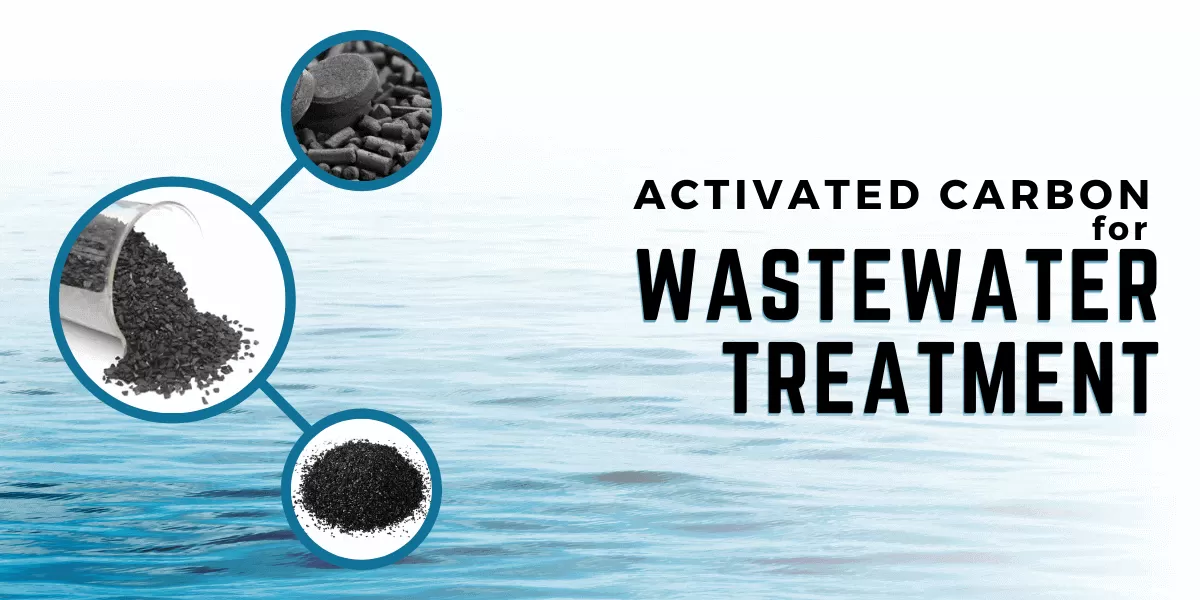
1. Fundamental Adsorption Physics and Surface Chemistry in Wastewater
Activated carbon functions primarily via physical adsorption (physisorption) governed by London dispersion forces (a sub-category of van der Waals forces), augmented in specific scenarios by chemisorption via surface functional groups. However, evaluating carbon solely on its total BET surface area (often ranging from 800 to 1,200 m²/g) is an oversimplification in wastewater engineering. The efficiency of a carbon bed depends directly on the alignment between pore diameter and the molecular dimensions of the target contaminants.
Pore Size Distribution Dynamics
Activated carbon contains an internal network categorized into three primary International Union of Pure and Applied Chemistry (IUPAC) classifications:
Micropores (diameter < 2 nm): Account for roughly 85–95% of the total internal surface area. These pores capture low-molecular-weight volatile organic compounds (VOCs), halogenated solvents, trace pesticides, and small aromatic rings.
Mesopores (diameter 2–50 nm): Serve as critical transport conduits and the primary adsorption sites for medium-to-large molecules, including synthetic textile dyes, humic acids, surfactants, pharmaceuticals, and complex hydrocarbons.
Macropores (diameter > 50 nm): Offer negligible adsorption capacity (< 1 m²/g) but act as structural entryways that minimize internal diffusion resistance, allowing target adsorbates to reach the deeper mesopore and micropore structures.
In wastewater streams rich in broad-spectrum organic matter, an exclusively microporous carbon blinds quickly. The entrance pathways become blocked by large background Natural Organic Matter (NOM) and humic fractions, preventing smaller target micropollutants from accessing internal micropores. High-performance industrial wastewater applications typically demand a balance of well-developed mesoporosity paired with deep microporous capture zones.
Surface Functionality and Zeta Potential
Beyond physical porosity, the surface oxygen complexes (carboxyl, phenolic, lactone, and quinone groups) dictate the surface charge and wettability of the carbon matrix. The point of zero charge (pHPZC) determines whether the carbon surface carries a net positive or negative charge at operating pH:
At a solution pH < pHPZC, the surface is positively charged, enhancing the adsorption of anionic species (such as sulfonated dyes or perfluorinated carboxylic acids).
At a solution pH > pHPZC, the surface becomes negatively charged, promoting the electrostatic repulsion of negatively charged organics while facilitating the uptake of cationic species and heavy metal complexes.
2. Raw Material Matrix: Selecting the Right Carbon Source
The precursor material determines the structural robustness, initial pore morphology, and mechanical integrity of wastewater treatment activated carbon. Industrial specifiers evaluate three primary carbon bases:
Bituminous Coal-Based Carbon
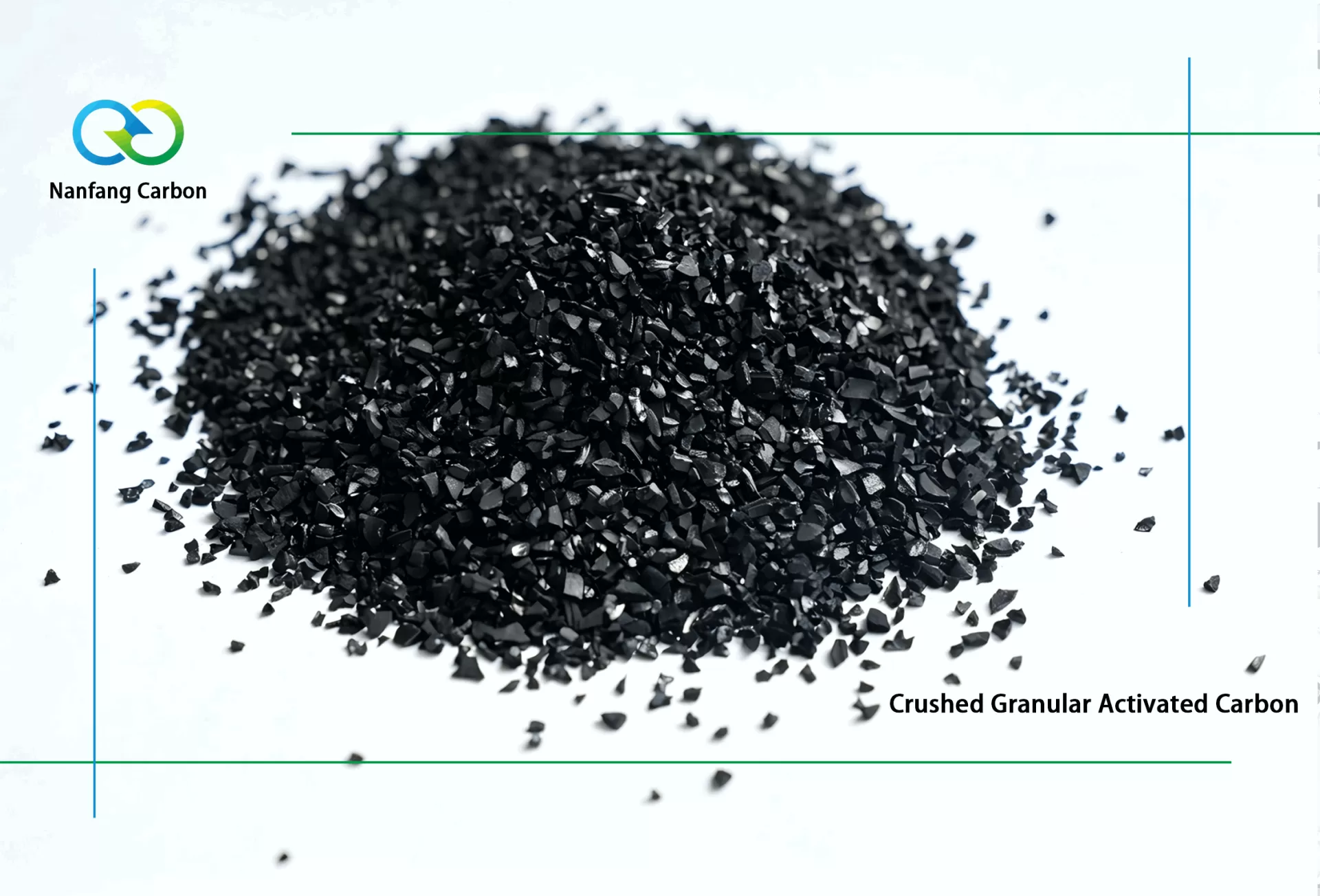
Bituminous coal yields a balanced, polymodal pore distribution containing abundant micropores alongside an extensive mesopore network. It offers high mechanical hardness (abrasion numbers typically > 90) and high bulk density.
Optimal Applications: Heavy industrial effluent, secondary petrochemical wastewater, refinery discharge, mixed landfill leachate, and broad-spectrum COD polishing.
Engineering Advantage: Exceptional resistance to attrition during backwashing and thermal reactivation; resists rapid fouling from complex background matrices.
Coconut Shell-Based Carbon
Coconut shell carbon is predominantly microporous (often > 85–90% micropore volume) with a tight, uniform pore structure and elevated hardness.
Optimal Applications: Potable water polishing, trace-level VOC removal, final polishing of municipal tertiary effluent, and post-RO permeate purification.
Engineering Limitation: Susceptible to surface fouling and pore blockage when exposed to wastewater with high molecular weight NOM or elevated colloidal organics.
Wood-Based Carbon
Chemically or thermally activated wood creates a distinctly open, predominantly mesoporous and macroporous structure with a lower bulk density.
Optimal Applications: Decolorization in dye and textile manufacturing, pulp and paper wastewater, removal of bulky organic molecules like lignins, tannins, and humic substances.
Engineering Limitation: Lower mechanical density and abrasion resistance require gentler handling and slower hydraulic loading rates.
Manufacturers like Nanfang produce specialized bituminous coal and multi-precursor carbons, tailoring the activation profile (iodine number, molasses number, and abrasion index) to balance chemical capture capacity with extended operational life.
3. Key Quality and Performance Metrics for Procurement
When reviewing technical datasheets for wastewater treatment activated carbon, engineering teams analyze specific standardized parameters rather than generic marketing claims:
Iodine Number (ASTM D4607, typical range: 800–1100 mg/g): Measures the carbon's capacity to adsorb small molecules, serving as a direct indicator of micropore development (pores > 1.0 nm).
Methylene Blue / Molasses Number (typical range: 150–300 mg/g / 180–300): Quantifies mesopore and transport-pore efficiency for medium-to-large molecular weight organic species.
Hardness / Abrasion Number (ASTM D3802, > 90% recommended for GAC): Evaluates the carbon's ability to resist degradation, attrition, and fines generation under continuous hydraulic sheer, high-rate backwashing, and sluicing.
Apparent (Bulk) Density (typical range: 400–550 kg/m³): Governs the mass of carbon that can fit within a given contactor volume and dictates the thermal regeneration throughput.
Ash Content and Composition (ASTM D2866, typically < 8–12%): High ash reduces overall adsorption capacity per unit mass. Acid-soluble iron, silica, and calcium fractions can leach into treated streams or catalyze premature fouling.
4. Process Engineering: PAC vs. GAC vs. Fixed-Bed Contactor Design
Deploying wastewater treatment activated carbon generally relies on two primary physical forms, each demanding distinct hydraulic and mechanical configurations:
Powdered Activated Carbon (PAC) Operations
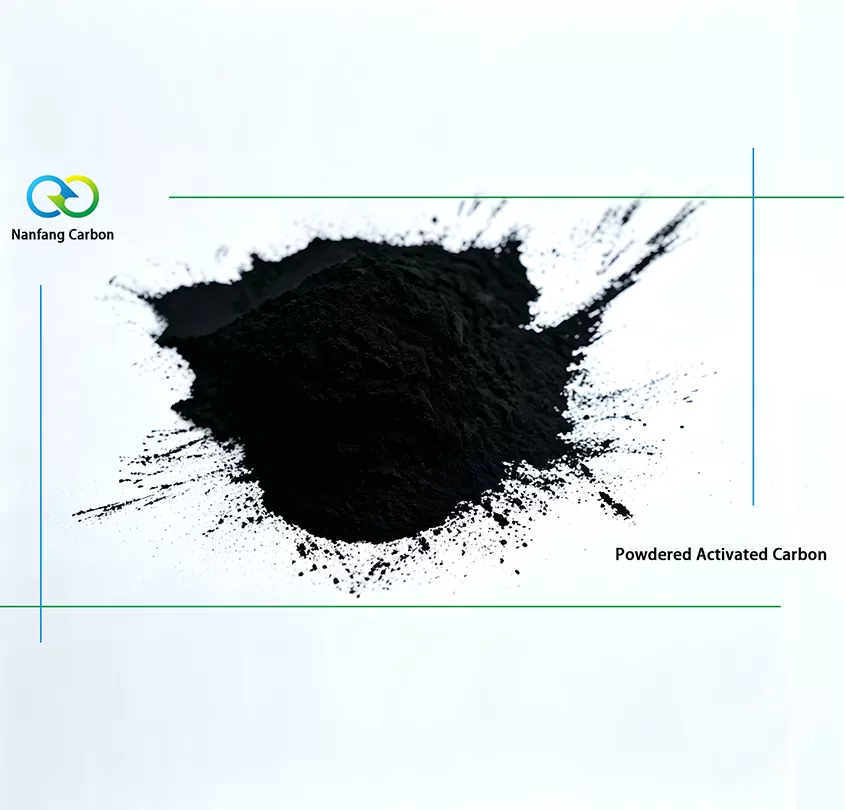
PAC features particle diameters typically below 45 µm (passing a 325-mesh sieve). Because of its small particle size, diffusion paths are short, yielding rapid adsorption kinetics.
Dosing Integration: PAC is typically prepared as a 5–10% slurry and injected upstream of primary/secondary clarifiers, into rapid mix tanks, or directly into the aeration basin (e.g., the Powdered Activated Carbon Treatment - PACT process).
Process Strengths: Low initial capital expenditure (CAPEX); provides operational flexibility to handle intermittent shock loads, seasonal pesticide influxes, or chemical spill containment.
Operational Limitations: PAC cannot be thermally reactivated cost-effectively on-site and is permanently lost to waste activated sludge (WAS), increasing sludge disposal volumes and operating costs (OPEX) under continuous heavy loading.
Granular Activated Carbon (GAC) Fixed-Bed Engineering
GAC utilizes particle sizes ranging from 8×30 US Mesh (0.60–2.36 mm) to 12×40 US Mesh (0.425–1.70 mm). It is deployed in pressurized or gravity-fed downflow fixed-bed contactors, operating continuously under steady-state hydraulic conditions.
Key parameters for GAC contactor design include:
Empty Bed Contact Time (EBCT): Defined as the volume of the carbon bed divided by the volumetric flow rate. $$\text{EBCT} = \frac{V_{\text{bed}}}{Q}$$ While municipal drinking water systems may operate with an EBCT of 8–12 minutes, complex industrial wastewater containing refractory COD, chlorinated solvents, or PFAS typically requires an EBCT of 15 to 30+ minutes to establish an optimal Mass Transfer Zone (MTZ).
Hydraulic Loading Rate (HLR): Standard linear surface loading velocities operate between 5 and 15 m³/m²/h (approx. 2 to 6 gpm/ft²). Excessive loading rates trigger elevated bed pressure drops ($\Delta P$) and risk channeling.
Contactor Configuration (Lead-Lag vs. Parallel): A series (lead-lag) configuration maximizes carbon bed utilization. The lead vessel operates past initial contaminant breakthrough to absolute exhaustion, while the lag vessel captures migrating pollutants, ensuring consistent effluent compliance. Once spent, the lead vessel is isolated, refilled with fresh or reactivated carbon, and placed back in the lag position.
5. Critical Industrial Applications and Contaminant Profiles
Industrial wastewater streams contain diverse, highly concentrated organic matrices. Wastewater treatment activated carbon provides targeted treatment across varied industrial sectors:
Chemical and Petrochemical Processing
Downstream effluents often contain toxic phenolic compounds, BTEX (benzene, toluene, ethylbenzene, xylenes), polycyclic aromatic hydrocarbons (PAHs), and chlorinated solvents. GAC fixed beds serve as polishing stages post-biological aeration, stripping non-biodegradable organics to ensure compliance with strict discharge permits.
Pharmaceutical & Active Ingredient (API) Manufacturing
Pharmaceutical facilities produce intermittent batches containing high concentrations of antibiotics, hormones, cytostatic agents, and solvents. Activated carbon prevents the release of biologically active compounds into local waterways, eliminating risks tied to antimicrobial resistance (AMR) and aquatic toxicity.
PFAS and Persistent Organic Pollutant Remediation
Per- and polyfluoroalkyl substances (PFAS, including PFOS, PFOA, and GenX) contain carbon-fluorine bonds that resist chemical oxidation, biological digestion, and conventional coagulation. High-purity, coal-based, and reagglomerated GAC grades supplied by manufacturers like Nanfang yield extended bed life through deep-pore adsorption kinetics, often operating ahead of, or paired with, ion exchange (IX) resins.
Textile Dye and Surfactant Effluent
Dye houses discharge large volumes of recalcitrant azo-dyes, optical brighteners, and quaternary ammonium surfactants. High-mesopore carbon deconstructs light-blocking color compounds and decreases toxicity prior to municipal sewer discharge or zero-liquid discharge (ZLD) membrane systems.
6. Managing Operational Challenges: Fouling, Headloss, and Reactivation
The long-term operating cost of a wastewater treatment activated carbon installation is dictated by bed life, pressure management, and reactivation cycles.
Pretreatment and Bio-Fouling Control
Total Suspended Solids (TSS) Reduction: Feed streams should maintain TSS levels below 5 mg/L before entering fixed GAC beds. Suspended particles settle within the interstitial voids of the carbon matrix, causing rapid increases in headloss and necessitating frequent backwashing. Pre-filtration (via multi-media, sand, or cartridge filters) is standard practice.
Biological Growth (BAC Conversion): In warm, organic-rich streams, carbon surfaces naturally host biofilms. While Biological Activated Carbon (BAC) can assist in breaking down biodegradable organics, uncontrolled biomass increases bed resistance, induces anaerobic bio-fouling, and produces hydrogen sulfide ($H_2S$). Periodic, controlled fluidization backwashes—supplemented with air scour—are essential.
Thermal Reactivation Economics
Once the adsorption capacity of GAC is exhausted (evidenced by breakthrough curves tracking target parameters like TOC, COD, or specific halogenated compounds), the media must be replaced or regenerated.
High-Temperature Thermal Reactivation: Spent carbon is processed inside rotary kilns or multiple-hearth furnaces at 800°C–950°C in a controlled steam atmosphere. Adsorbed organic compounds are thermally desorbed and incinerated in an afterburner, restoring the carbon's internal pore structure.
Sustainability and Cost Reductions: Thermal reactivation yields a 70–80% lower carbon footprint compared to producing virgin carbon, alongside substantial procurement savings. Specifying high-hardness coal-based carbon minimizes attritional mass loss (typically under 5–7% during processing).
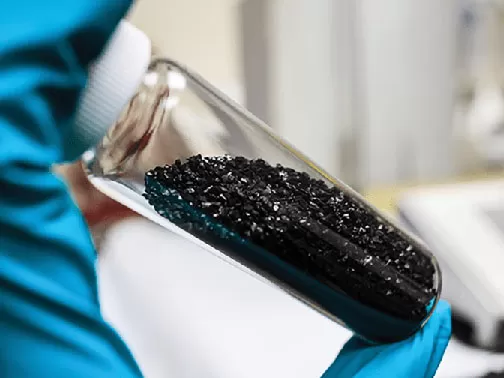
7. Specifying Nanfang Carbon for Wastewater Systems
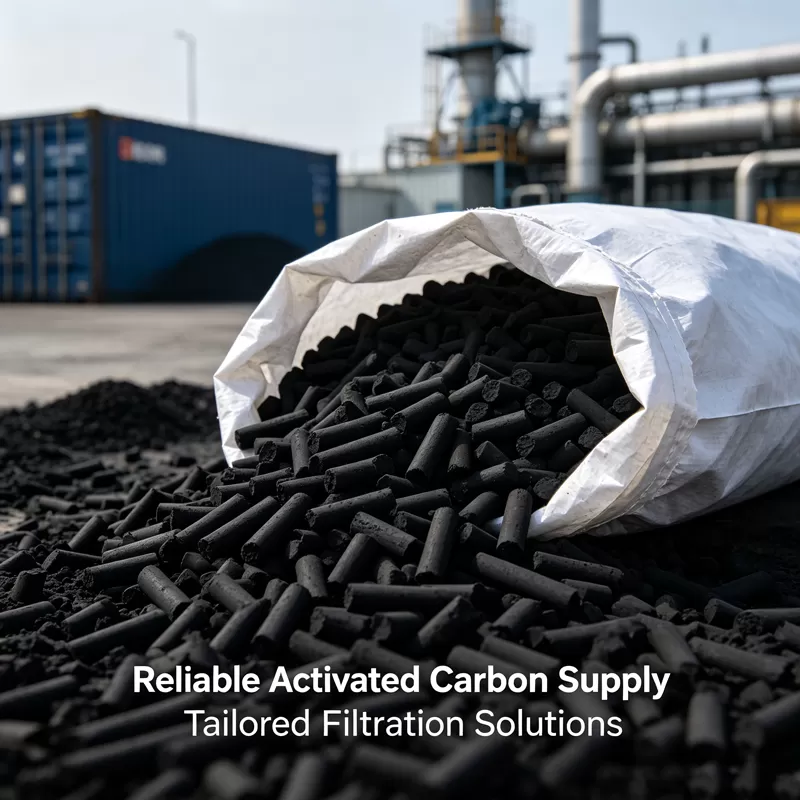
Selecting the optimal wastewater treatment activated carbon requires balancing raw material attributes, fluid mechanical constraints, and target contaminant profiles. Nanfang engineers and manufactures advanced activated carbon products built for demanding municipal and industrial wastewater applications.
Whether targeting complex refractory COD reduction in chemical manufacturing, polishing tertiary effluent to comply with modern nutrient regulations, or removing persistent trace micropollutants like PFAS, Nanfang provides tailored material specifications, including:
High-density, low-attrition agglomerated bituminous coal GAC.
Specialized high-mesopore wood-based carbons for bulk dye, color, and surfactant adsorption.
Micro-milled, rapid-kinetics PAC for municipal spill response and seasonal peak load capture.
Comprehensive technical support, including rapid-small-scale-column tests (RSSCT), adsorption isotherm modeling, and spent carbon analysis.
Optimize your wastewater operations. Contact the technical engineering team at Nanfang today to request a carbon media audit, sample test kits, or a custom performance quotation for your treatment facility.
Frequently Asked Questions (FAQ)
1. How do you determine when activated carbon in a wastewater system is fully exhausted?
Carbon exhaustion is determined by measuring the target contaminant concentration in the effluent over time to plot a breakthrough curve. When the effluent concentration reaches a predetermined regulatory threshold (typically 5% to 10% of the influent concentration for a lead vessel), that carbon stage is considered spent. Facilities typically monitor surrogate bulk parameters—such as Total Organic Carbon (TOC), Chemical Oxygen Demand (COD), UV254 absorbance—or run laboratory chromatography for target compounds like PFAS, VOCs, or phenols.
2. What is the typical life expectancy of a GAC bed in industrial wastewater applications?
The operational lifespan of a GAC bed varies from a few weeks to over 12–24 months, depending heavily on the influent organic loading, the presence of competing background TOC, and the required effluent limits. In high-COD chemical process streams, beds may exhaust in 1 to 3 months without upstream biological treatment. In municipal tertiary polishing or low-concentration groundwater remediation systems, a bed can operate for 12 to 24 months before requiring replacement or thermal reactivation.
3. Why is bituminous coal-based carbon preferred over coconut shell carbon for industrial wastewater treatment?
Industrial wastewater often contains diverse, complex, and high-molecular-weight organic compounds. Bituminous coal carbon features a broad pore size distribution that combines micropores, mesopores, and macropores. Coconut shell carbon contains predominantly micropores (< 2 nm), making it prone to premature surface fouling and pore blockage from large organic molecules. The mesopores in bituminous carbon act as transport highways, allowing larger molecules to adsorb and smaller target molecules to diffuse deeper into the carbon core.
4. How does Empty Bed Contact Time (EBCT) affect wastewater treatment performance?
EBCT dictates the hydraulic duration the wastewater remains within the carbon bed. Adequate EBCT is required for target molecules to diffuse through the boundary fluid film, enter the macropores/mesopores, and adsorb onto internal micropore surfaces. If the EBCT is set too low (e.g., < 5 minutes for complex organics), the mass transfer zone (MTZ) will extend beyond the bed depth, triggering immediate premature breakthrough and poor media utilization.
5. Can activated carbon remove heavy metals from wastewater?
Standard activated carbon can remove certain heavy metals (such as hexavalent chromium, mercury, and complexed copper/nickel) through weak physical adsorption, reduction reactions, or precipitation within the pores. However, untreated virgin carbon generally shows limited capacity for ionic, non-complexed heavy metals compared to specialized ion exchange resins. To achieve high removal efficiencies for inorganic metals, chemically impregnated carbons (e.g., sulfur-impregnated or surface-oxidized grades) are recommended.
.webp)