
Engineered Performance of Wood Based Activated Carbon in Industrial Adsorption Systems
High-efficiency liquid-phase purification and specific vapor recovery systems demand carbon matrices with distinct structural characteristics. Across chemical processing, pharmaceutical refining, and food processing, wood based activated carbon remains a benchmark adsorbent because of its high internal surface area and predominantly mesoporous pore size distribution. Unlike mineral-derived alternatives such as anthracite or bituminous coal, woody biomass provides a unique lignocellulosic cellular architecture. When processed through controlled thermal or chemical activation, this biological template converts into an interconnected carbon matrix capable of capturing complex, high-molecular-weight compounds that standard microporous carbons fail to process.
Selecting the appropriate adsorbent requires a detailed understanding of precursor raw materials, activation chemistry, surface functionalization, and transport kinetics. Evaluating these parameters ensures optimal filter bed service life, low pressure drops, and cost-effective regeneration cycles.
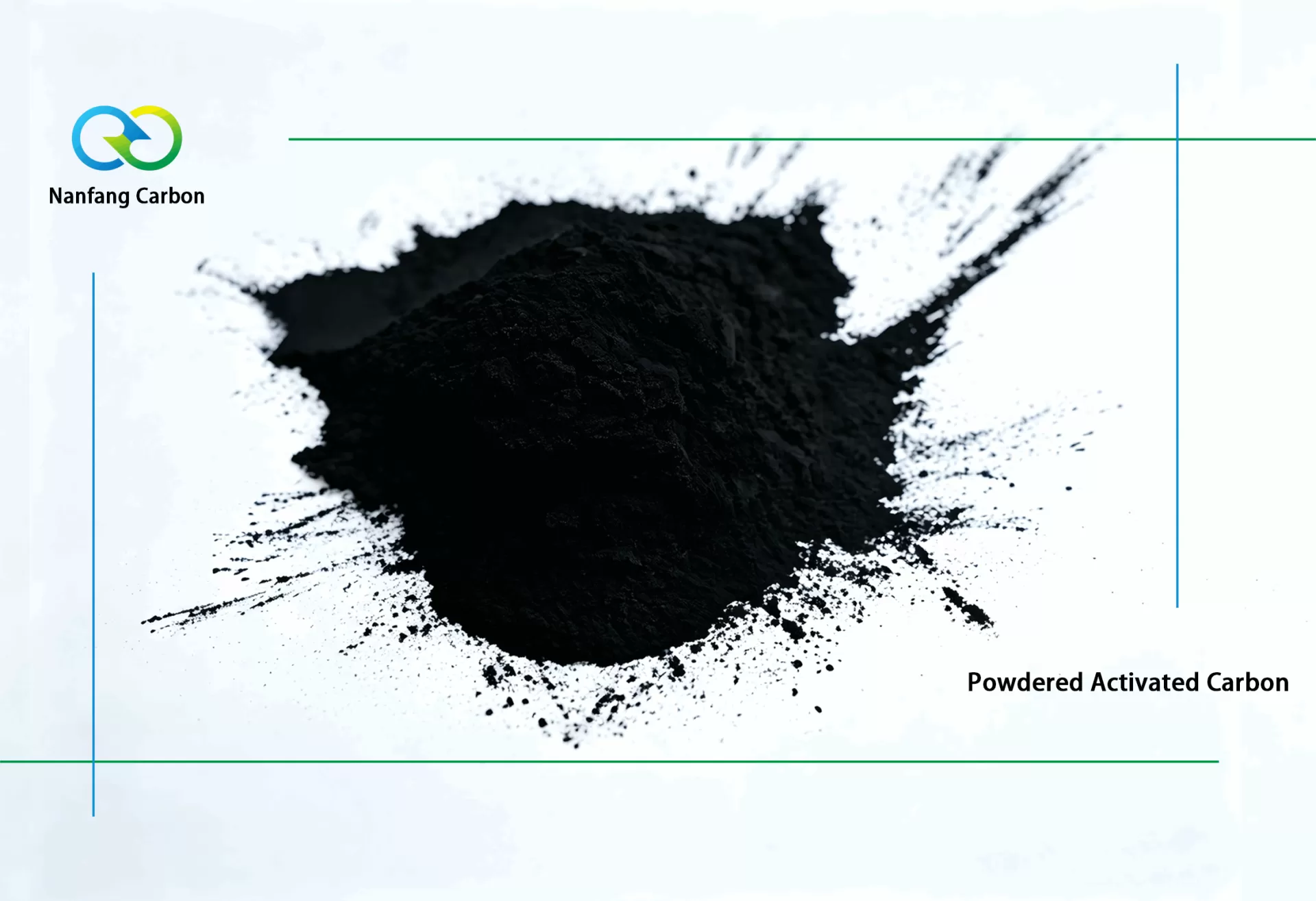
Precursor Characteristics and the Lignocellulosic Carbon Matrix
The performance characteristics of the finished product originate within the cellular composition of the botanical precursor. Selected hardwoods, softwoods, and recovered forestry sawdust consist primarily of three biopolymers: cellulose, hemicellulose, and lignin. The natural ratios of these polymers directly influence the final pore network.
Cellulose and Hemicellulose: These linear and branched carbohydrate polymers decompose at lower temperatures (200°C to 380°C). During carbonization, their rapid thermal degradation forms broad micropores and transport pathways.
Lignin: An aromatic, highly cross-linked polymer that exhibits thermal stability up to 500°C. Lignin contributes to the structural carbon yield and forms the rigid walls that prevent matrix collapse during high-temperature activation.
Because wood possesses lower natural mineral content compared to mineral coals, the resultant carbon matrix features significantly lower native ash content. This natural purity simplifies downstream acid-washing processes, preventing unwanted ion leaching during sensitive liquid-phase operations such as citric acid, lactic acid, or pharmaceutical ingredient purification.
Activation Chemistries: Phosphoric Acid vs. Steam Gasification
The manufacturing process for wood based activated carbon typically follows one of two distinct routes: chemical activation using dehydrating reagents or thermal activation using oxidizing gases.
Phosphoric Acid ($H_3PO_4$) Chemical Activation
Chemical activation represents the predominant manufacturing pathway for high-mesopore powdered carbons. Uncarbonized wood chips or sawdust are blended with a concentrated solution of phosphoric acid at controlled reagent-to-wood weight ratios (typically 1:1 to 3:1). The impregnated material enters a rotary kiln operated at moderate temperatures between 400°C and 600°C.
Inside the kiln, phosphoric acid acts as an acid catalyst for biopolymer depolymerization while simultaneously functioning as a physical template. The acid promotes dehydration reactions, cross-linking the cellulose and lignin fragments while forming phosphate and polyphosphate ester bridges:
$$2\text{H}_3\text{PO}_4 \rightarrow \text{H}_4\text{P}_2\text{O}_7 + \text{H}_2\text{O}$$
These chemical bridges expand the carbon skeleton, preventing thermal shrinkage during pyrolysis. As the thermal process concludes, the internal acid is recovered via counter-current water washing, leaving behind empty voids that translate into an extensive mesopore network (2.0 to 50.0 nm). Advanced producers like Nanfang calibrate the acid-to-precursor ratio precisely to target specific pore volume distributions for targeted molecular capture.
High-Temperature Steam Gasification
Thermal activation is a two-step process: low-temperature carbonization followed by high-temperature steam activation. Pre-carbonized wood charcoal is exposed to steam at temperatures between 850°C and 1000°C in an oxygen-depleted environment. Water vapor acts as a selective oxidizing agent, driving the endothermic water-gas reaction:
$$\text{C} + \text{H}_2\text{O} \rightarrow \text{CO} + \text{H}_2 \quad (\Delta H = +131.3 \text{ kJ/mol})$$
Steam selectively removes disorganized carbon atoms, converting narrow closed voids into active micropores (less than 2.0 nm). This thermal route is primarily selected when manufacturing granular or extruded wood carbons designed for vapor-phase adsorption and catalyst support applications.
Pore Morphology and Mass Transfer Kinetics
The operational capability of an adsorbent depends not only on its total Brunauer-Emmett-Teller (BET) surface area, which routinely spans 900 to 1800 m²/g, but more importantly on the accessibility of that surface area to target adsorbate molecules.
Industrial adsorption problems rarely involve single, compact molecules. Contaminants such as polyphenols, melanoidins, caramel color bodies, humic substances, and synthetic surfactants have hydrodynamic diameters exceeding 1.5 nm. In microporous coal or coconut carbons, these bulky molecules encounter steric hindrance at the pore entrance, causing premature pore blockage and slowing internal diffusion rates.
Because chemical activation yields a mesopore ratio often exceeding 50% of the total internal pore volume, the transport kinetics of wood based activated carbon accommodate bulky impurities seamlessly. The broad mesoporous channels function as primary transport arteries, reducing the intraparticle diffusion distance and enabling target molecules to migrate rapidly into active adsorption sites. This mechanism prevents pore mouth jamming, maximizes dynamic working capacity, and lowers overall carbon consumption per treated cubic meter of liquid.
Performance Characterization Indices
Standard quality control parameters used for evaluating microporous media fail to convey the true operational capacity of wood carbons. Process engineers evaluate several complementary testing standards:
Iodine Number (mg/g): Measures small molecule adsorption (pores less than 1.0 nm). While useful as a baseline surface area check, a high iodine number alone does not indicate superior performance in liquid decolorization.
Methylene Blue Adsorption (mg/g or mL): Reflects capacity within the 1.5 to 3.0 nm pore size spectrum. Highly effective for judging the removal of medium-sized color precursors, pharmaceutical byproducts, and industrial dyes.
Molasses Number / Decolorization Index: Measures adsorption capacity for high-molecular-weight color bodies (>2.8 nm). Wood carbons regularly exhibit high molasses numbers, outperforming coal-based equivalents in high-viscosity food and chemical syrups.
Apparent (Bulk) Density: Wood carbons feature a low bulk density, generally between 0.28 and 0.45 g/cm³. This is roughly half the density of coal-based alternatives (0.45 to 0.60 g/cm³), meaning significantly less mass is required to fill a given vessel volume.
Industrial Liquid-Phase Applications
Liquid purification applications leverage the broad pore distribution and neutral purity profile of wood carbons to achieve high operational throughput.
Sugar and Edible Sweetener Decolorization
In sucrose, high fructose corn syrup (HFCS), and glucose refining, process streams contain thermal degradation products, hydroxymethylfurfural (HMF), and amino-carbonyl condensation complexes (Maillard reaction products). Powdered wood carbon provides the necessary mesoporous hierarchy to trap these large chromatic complexes quickly. The fast adsorption kinetics accommodate the short contact times typical in rotary vacuum precoat filtration and plate-and-frame filter press systems.
Pharmaceutical and Biochemical Refinement
Antibiotic broths, active pharmaceutical ingredients (APIs), vitamins, and amino acids (such as monosodium glutamate and lysine) require selective purification where color removal must occur without adsorbing target product molecules. The low concentration of acid-soluble iron, heavy metals, and chloride ions makes washed wood carbon the industry standard. Furthermore, high purity ensures that pharmaceutical compounds avoid catalytic decomposition triggered by residual mineral oxides.
Industrial and Municipal Water Polishing
When municipal utilities or industrial plants face seasonal blooms of geosmin, 2-methylisoborneol (MIB), natural organic matter (NOM), or per- and polyfluoroalkyl substances (PFAS), wood based activated carbon functions as a direct dosage barrier. Dosed directly into rapid mix basins or clarifiers, the rapid adsorption kinetics capture transient taste and odor spikes before the water reaches deep-bed sand filters.
Vapor-Phase Recovery and Emission Abatement
Although widely known for liquid applications, specialized grades of wood based activated carbon provide lower flow resistance and exceptional recovery mechanics in gas-phase operations.
In solvent recovery plants, automotive evaporative loss control devices (canisters), and high-flow volatile organic compound (VOC) abatement systems, extruded and granular wood carbons perform reliably. The large pore network enhances the desorption efficiency during purge cycles. Whether regenerating via heated nitrogen or vacuum extraction, heavy hydrocarbons (such as gasoline fractions, toluene, or chlorinated solvents) desorb completely from wood-derived mesopores without the progressive pore plugging that can degrade coal or coconut carbons over repeated thermal swings.
The lower packed bed weight reduces the structural support load on large-diameter adsorber vessels, lowering capital costs for vessel fabrication and civil engineering foundations.
Procurement and Engineering Evaluation Standards
Specifying the proper carbon media involves analyzing the process conditions alongside standard supplier data sheets.
| Parameter | Wood Based (Chemically Activated) | Bituminous Coal (Steam Activated) | Coconut Shell (Steam Activated) |
|---|---|---|---|
| Primary Pore Structure | Mesoporous / Macroporous (2 - 50 nm) | Micro / Mesoporous (< 2 nm to 10 nm) | Predominantly Microporous (< 2 nm) |
| Bulk Density (g/cm³) | 0.28 – 0.42 | 0.45 – 0.55 | 0.48 – 0.58 |
| Ash Content (%) | < 3% to 6% (Acid Washed: < 1%) | 8% – 15% | 2% – 5% |
| Molasses Decolorization | High to Exceptional | Moderate | Low |
| Primary Target | Large molecules, dyes, organics | Mixed organics, general water | Small VOCs, trace contaminants |
To avoid operational inefficiencies, manufacturing facilities at Nanfang maintain strict oversight over water-soluble ash, pH stabilization, and particle size distribution (D10, D50, D90 metrics). In liquid-phase filtration systems, poorly classified powders with excessive sub-mesh fines cause rapid blinding of filter septums and premature pressure development across the system. Accurate particle classification ensures stable filtration cycles, predictable cake permeability, and efficient sluicing during blowdown operations.
Frequently Asked Questions
Why does wood based activated carbon outperform coal carbon in liquid decolorization?
Liquid decolorization requires the removal of large-molecule color compounds (melanoidins, polyphenols, macromolecular polymers) that typically exceed 1.5 to 2.0 nanometers in diameter. Chemically activated wood carbon features a high proportion of mesopores (2 to 50 nm), providing accessible transport routes and adsorption zones for these large structures. Coal-based carbons contain mostly micropores (less than 2 nm), which restrict entrance and lead to slower kinetics and reduced dynamic capacity.
How does the low bulk density of wood carbon affect filtration system design?
Because wood carbon has an apparent density of roughly 0.30 to 0.40 g/cm³ compared to 0.50 g/cm³ for coal carbon, a vessel of equal volume requires roughly 30% to 40% less mass of wood carbon. When calculating dosage for powdered injection, volumetric dosing systems must be calibrated to avoid over-dosing mass, which directly cuts operational transportation, handling, and disposal costs.
Can chemically activated wood carbon be regenerated thermally?
Granular and extruded forms of thermally activated wood carbon are readily regenerated using standard multi-hearth furnaces or rotary kilns. However, powdered chemically activated wood carbon is typically treated as a single-use expendable media due to mechanical handling losses during filtration. Spent powdered cakes are frequently dewatered and sent for thermal energy recovery or land application, depending on the nature of the adsorbed contaminants.
What is the impact of residual phosphate in acid-activated wood carbon?
If not thoroughly washed during production, residual phosphate compounds can lower the slurry pH and leach free phosphate ions into process streams. In food and pharmaceutical applications, this leaching can interfere with enzymatic actions or violate chemical purity thresholds. Standard engineering specs require water-washed or neutralized grades to ensure a stable neutral pH (6.0 to 8.0) and minimize soluble phosphate extraction.
Which particle size distribution is optimal for liquid slurry contact processes?
Powdered activated carbon (PAC) for liquid contact typically requires 90% or more to pass through a 200-mesh (75 μm) or 325-mesh (45 μm) screen. A finer grind increases the available external surface area and accelerates mass transfer. However, the particle size distribution must remain tightly controlled to eliminate excessive sub-micron fines, which increase cake resistance and cause rapid pressure drops across downstream filtration equipment.
Custom Specifications and Bulk Supply Procurement
Securing the right performance from an industrial adsorption system relies on matching precise carbon properties to your operating parameters. Variations in feedstock chemistry, impregnation ratios, and post-activation acid washing dictate performance in the field. When procuring high-grade wood based activated carbon requires matching exact pore size distributions, ash tolerances, or custom mesh gradings, contact the engineering team at Nanfang to request certified test data, pilot test samples, or a detailed quotation tailored to your operational specifications.
.webp)