
Industrial Activated Carbon Solutions: Technical Parameters & Process Sizing
Industrial activated carbon serves as the primary adsorbent media across chemical manufacturing, municipal wastewater remediation, metallurgical refining, and industrial gas purification. Engineered through controlled carbonization and subsequent activation of carbonaceous precursors, this porous material relies on surface chemistry and an extensive internal network to capture organic compounds, inorganic pollutants, and specific process contaminants. Selecting an appropriate grade demands a thorough evaluation of pore structure, mechanical hardness, fluid dynamics, and media life cycles.
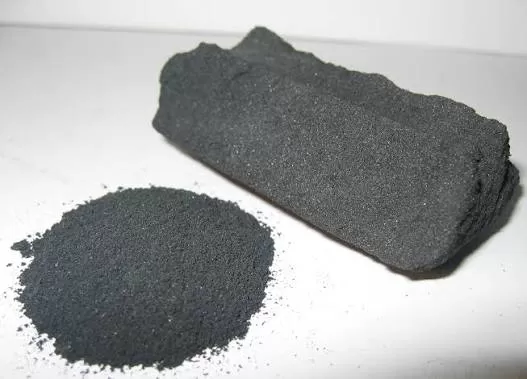
Precursor Selection and Activation Chemistry
The manufacturing process determines the fundamental pore topology and mechanical resilience of the final carbon matrix. Raw materials differ significantly in their elemental composition, volatile matter, and innate cellular structures, dictating their suitability for specific process streams.
Bituminous and Anthracite Coal: Yields a balanced pore matrix containing both micropores and mesopores. Coal-based media provide high volumetric adsorption capacity, making them standard for continuous wastewater treatment, high-concentration volatile organic compound (VOC) recovery, and dynamic liquid-phase systems.
Coconut Shell: Produces a predominantly microporous structure with small pore diameters (under 2 nanometers). Coconut shell media offer superior hardness, low attrition rates, and high surface area, ideal for gas separation, trace VOC abatement, and precious metal recovery.
Lignocellulosic Wood: Generates an open structure with high mesopore and macropore volumes. Wood-based media excel in liquid-phase decolorization, large-molecule removal, and processes requiring rapid transport kinetics.
Activation converts the initial carbonized char into a high-capacity adsorbent through one of two primary pathways:
Thermal activation utilizes oxidizing gases—principally steam, carbon dioxide, or a combination of both—at temperatures ranging from 800°C to 1050°C. The steam reaction is endothermic, selectively gasifying carbon atoms to open internal pathways and form high microporosity. Precise control over kiln residence time and oxidation rates allows manufacturers to target specific iodine numbers and carbon tetrachloride (CTC) adsorption values.
Chemical activation involves impregnating uncarbonized raw material with dehydrating agents such as phosphoric acid or potassium hydroxide, followed by thermal treatment between 400°C and 700°C. The chemical agent restricts tar formation and prevents matrix shrinkage during pyrolytic decomposition. Subsequent washing extracts the reagent, leaving behind a wide pore size distribution well-suited for color bodies and high-molecular-weight process foulants.
Standard Parameters for Evaluating Industrial Activated Carbon
Specifying the correct industrial activated carbon requires assessing physical and chemical metrics established by standardized ASTM and AWWA testing procedures. Relying solely on total surface area calculated by the Brunauer-Emmett-Teller (BET) method can lead to inaccurate media sizing.
Pore Size Distribution and Adsorptive Indicators
The internal pore volume dictates target molecule retention. Standardized testing parameters measure affinity for molecules of varying kinetic diameters:
Iodine Number (ASTM D4607): Measures the adsorption of iodine from aqueous solution, expressed in milligrams per gram (mg/g). Typical values range from 800 to 1200 mg/g, serving as an indicator of micropore volume (pores < 2 nm) suitable for low-molecular-weight compounds.
Carbon Tetrachloride (CTC) / Butane Working Capacity (ASTM D3467 / ASTM D5228): Measures gas-phase microporous adsorption. Higher percentages directly correlate with superior vapor-phase retention capacity.
Methylene Blue Number: Quantifies the capacity for larger molecules (dimensions around 1.5 nm). High values point to well-developed mesoporosity (2 to 50 nm), required for dye removal, humic acid filtration, and pharmaceutical purification.
Mechanical and Physical Characteristics
In addition to adsorption capacity, the physical durability of the media dictates how well it withstands continuous fluid flow and thermal stress:
Ball-Pan Hardness (ASTM D3802): Quantifies resistance to degradation during transport, bed settling, and fluidization. Industrial systems subject media to hydraulic shear and pneumatic drag; low hardness ratings lead to fine generation, channel clogging, and downstream contamination.
Apparent Density (ASTM D2854): Defines the mass of carbon per unit volume. Denser carbons require larger bed masses for a fixed volumetric vessel, directly influencing vessel engineering and backwash expansion dynamics.
Ash and Moisture Content: Ash constitutes the non-carbon mineral matter (silica, iron, alumina, alkaline salts). High ash levels reduce available adsorption volume and introduce leachable ions into high-purity process streams. Acid-washed carbons are specified when mineral leaching must remain near zero.
Gas and Vapor Phase Purification Systems
In gas-phase installations, process engineers evaluate pressure drop, linear velocity, relative humidity, and bed mass transfer zones (MTZ). Industrial activated carbon functions either as a virgin adsorbent or an engineered catalytic carrier to capture diverse atmospheric pollutants.
Volatile Organic Compound (VOC) Abatement
Fixed-bed adsorbers handle industrial off-gases containing aromatics (benzene, toluene, xylene), chlorinated solvents, alcohols, and ketones. The gas stream passes through an extruded pellet or granular carbon bed where the organic vapors partition onto the internal carbon surface. Proper operation requires maintaining relative humidity below 60-70% to avoid capillary condensation of water vapor within the micropores, which reduces hydrocarbon capacity. System designs specify adequate empty bed contact time (EBCT)—often between 1 and 4 seconds depending on inlet concentrations—to ensure the MTZ remains fully contained within the vessel prior to breakthrough.
Flue Gas and Syngas Cleaning
Municipal solid waste incinerators, coal-fired power facilities, and biomass gasifiers deploy carbon injection or fixed filters to sequester heavy metals, dioxins, and furans. Powdered activated carbon (PAC) is often injected pneumatically into flue gas ducts upstream of fabric filters. The turbulent mixing ensures brief contact times where gas-phase mercury species and chlorinated aromatics adhere to the carbon surfaces before collection on the baghouse filter cakes.
Biogas and Gas Stream Desulfurization
Raw biogas and natural gas streams frequently carry hydrogen sulfide (H2S), which degrades downstream engines, compressors, and pipeline infrastructure. For these applications, impregnated carbons containing basic salts (such as potassium iodide, sodium carbonate, or copper oxides) catalyze the oxidation of H2S to elemental sulfur or sulfuric acid stored within the media matrix, achieving high sulfur-loading capacities.
Liquid Phase Separation and Process Streams
Liquid systems present complex mass transfer challenges due to higher fluid viscosity, competitive adsorption phenomena, and biological fouling.
Industrial Effluent and Wastewater Polishing
Discharge limits for chemical oxygen demand (COD), total organic carbon (TOC), adsorbable organic halides (AOX), and persistent organic pollutants (POPs) require tertiary activated carbon stages. Effluent filtration systems commonly use Granular Activated Carbon (GAC) arranged in series (lead-lag configurations). As the lead vessel approaches complete saturation, the lag vessel polishes the effluent, allowing maintenance crews to exchange the spent media without interrupting the process.
Process Water Dechlorination and Deozonation
Active chlorine, chloramines, and residual ozone generated during upstream oxidation steps attack downstream reverse osmosis (RO) polyamide membranes and ion exchange resins. Media like the specialized coal-based grades engineered by Nanfang reduce these halogens catalytically at the external and internal carbon surfaces, converting free chlorine into harmless chloride ions through surface oxidation mechanisms.
Chemical and Metallurgical Extraction
In the mining sector, the Carbon-in-Pulp (CIP) and Carbon-in-Leach (CIL) methods rely on coarse, high-hardness coconut shell carbon to recover gold-cyanide complexes from agitated slurries. The media must demonstrate exceptional abrasion resistance to prevent loss of precious metals in the tailings via eroded carbon fines.
Physical Forms and Hydrodynamic Performance
Selecting the physical form of industrial activated carbon involves balancing pressure drop, volumetric capacity, and handling logistics.
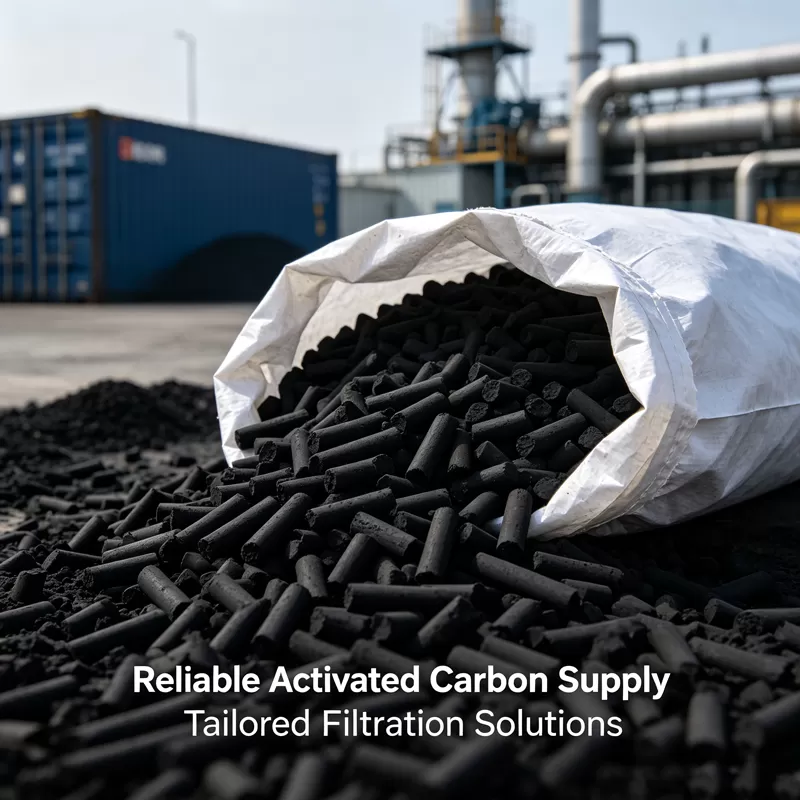
Extruded Pellets (EAC): Cylindrical media with uniform diameters (typically 0.9 mm to 8 mm). Extruded carbons minimize airflow resistance, providing uniform flow distribution in vapor-phase applications like solvent recovery and tank venting.
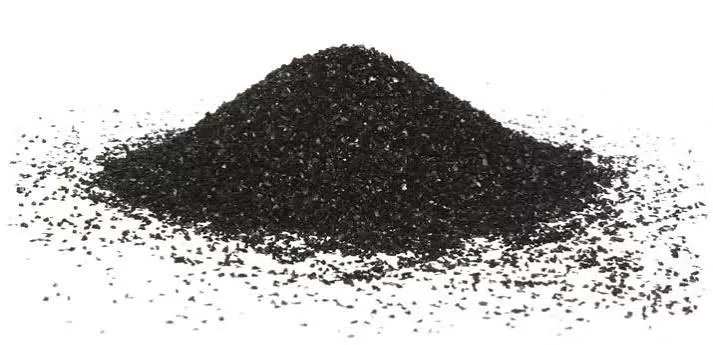
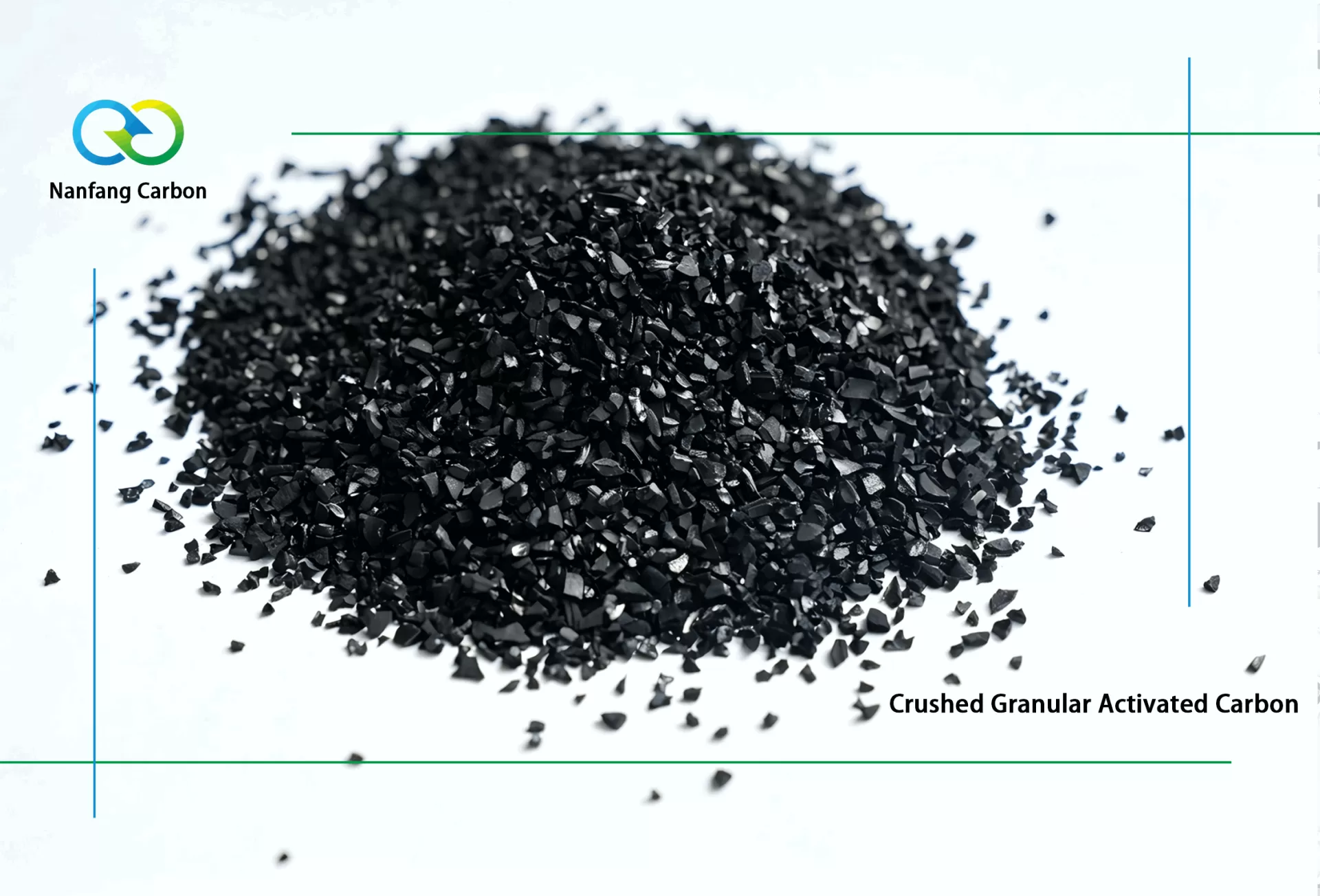
Granular Activated Carbon (GAC): Irregular particles ranging from 4x8 mesh down to 20x50 mesh. The irregular particle shape promotes turbulent boundary layers in liquid flow, aiding mass transfer while maintaining sufficient void fraction for backwash operations.
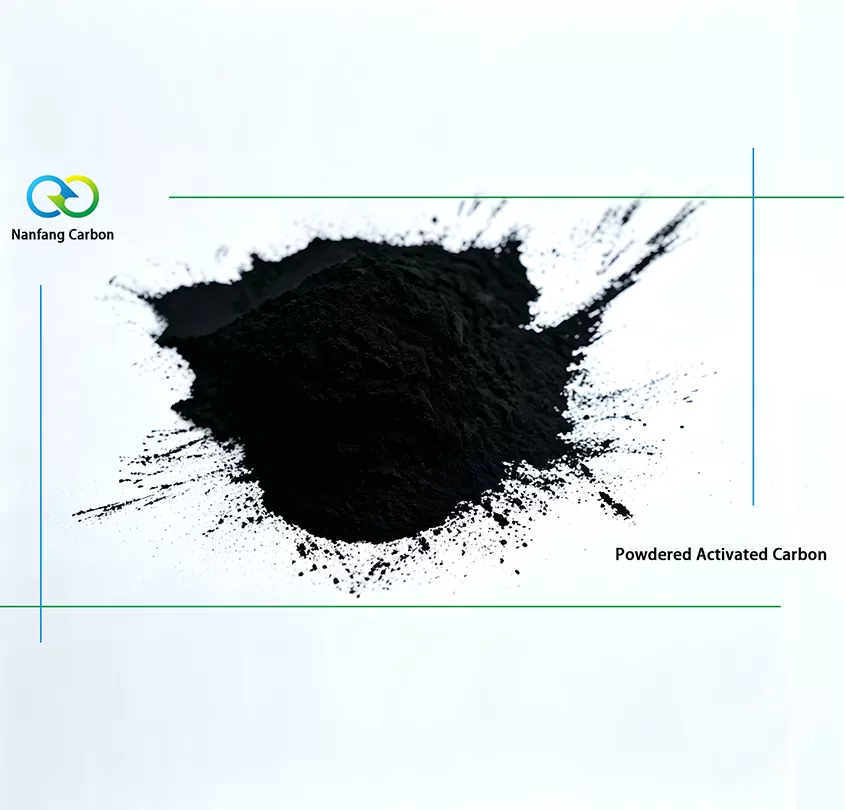
Powdered Activated Carbon (PAC): Finely milled particles predominantly passing a 200 or 325 mesh sieve. PAC is batched directly into liquid streams for batch purification, upset-condition treatment, or co-precipitation, and is separated downstream via clarifiers or membrane systems.
System designers calculate pressure drop through fixed beds using the Ergun equation, accounting for particle shape factors, bed voidage, fluid viscosity, and superficial velocity. Deviations in particle size distribution lead to channeling, premature breakthrough, and uneven thermal buildup during exothermic adsorption events.
Regeneration and Industrial Media Life Cycle
Once the internal pore volume reaches saturation, the media must be replaced or regenerated. The selection between single-use virgin media and reactivation depends on process economics, contaminant toxicity, and environmental compliance.
Thermal reactivation is the standard route for granular and pelletized media spent on non-hazardous organics. In specialized direct-fired rotary kilns or multiple-hearth furnaces, the spent carbon undergoes high-temperature treatment:
Drying to drive off volatile liquids (100°C to 150°C).
Thermal desorption and pyrolysis of volatile adsorbates (200°C to 650°C).
Gasification of residual pyrolytic char using steam at temperatures above 800°C.
Thermal reactivation typically restores 85% to 95% of the original iodine capacity, accompanied by a 5% to 10% mass loss due to oxidation and mechanical handling. Certain chemical adsorbates—such as polymerized resins, refractory minerals, and radioactive compounds—render media unsuitable for thermal reactivation, requiring proper disposal or incineration.
Quality Assurance and Manufacturing Standards
Precise quality monitoring during manufacturing guarantees predictable operational performance. Advanced producers like Nanfang employ continuous rotary kilns with multi-point temperature, oxygen, and steam sensors to minimize variability across batches. Comprehensive laboratory analyses verify compliance with international standards before dispatch.
Routine production checks include particle size distribution (sieving analysis), dust indices, floating content (for liquid applications), pH, and heavy metal leachability. Verifying these parameters ensures the media integrates seamlessly into automated handling equipment, silos, and pressurized vessels without causing bridging, dusting, or unexpected pressure fluctuations.
Frequently Asked Questions
What differentiates steam activation from chemical activation?
Steam activation is a physical, high-temperature thermal process (800°C–1050°C) using steam to selectively oxidize carbon, yielding a predominantly microporous structure well-suited for gas purification and small-molecule removal. Chemical activation uses dehydrating chemical agents at lower temperatures (400°C–700°C), resulting in broader pore size distributions with extensive mesoporosity suited for liquid-phase decolorization and large-molecule adsorption.
How is the breakthrough point of an industrial carbon bed determined?
Breakthrough occurs when the concentration of the target adsorbate in the vessel outlet exceeds allowable discharge limits. This point is monitored via inline sensors (such as photoionization detectors, gas chromatographs, or TOC analyzers) or analytical laboratory testing of regular sampling ports located through the bed depth.
Can spent industrial activated carbon be completely restored to its virgin state?
Thermal reactivation restores the majority of the original surface area and pore volume (typically 85% to 95%). However, irreversible ash buildup, pore widening, and slight structural loss during oxidation mean reactivated carbon shows a marginally different adsorption profile compared to virgin carbon.
Why is bed hardness an important metric in continuous process systems?
Hardness prevents physical attrition caused by fluid turbulence, vessel vibrations, and vigorous backwashing. Low-hardness carbons degrade into fines, which cause hydraulic short-circuiting, excessive pressure drop, clogged spray nozzles, and product contamination downstream.
How does relative humidity affect vapor-phase VOC adsorption?
When relative humidity exceeds 60-70%, water molecules begin to condense within the carbon micropores through capillary action. This moisture blocks target organic molecules from reaching active sites, sharply reducing overall VOC capture capacity.
Procurement and Engineering Support
Integrating high-efficiency filtration systems demands exact media specifications tailored to process chemistry, space constraints, and dynamic fluid conditions. Nanfang delivers reliable industrial activated carbon solutions, supported by comprehensive analytical services, custom sizing, and prompt global shipping. Contact our engineering team today to review process requirements, request technical datasheets, or obtain quotation packages for your industrial installations.
.webp)