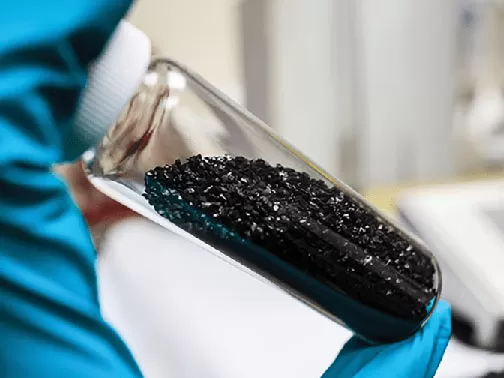
Optimizing Industrial Water Treatment with Coconut Shell Granular Activated Carbon
Industrial facilities face mounting pressure to conserve water, reduce operational costs, and satisfy strict environmental regulations. Standard filtration media often fall short when plants need to remove trace organic contaminants, chlorinated byproducts, and persistent chemicals.
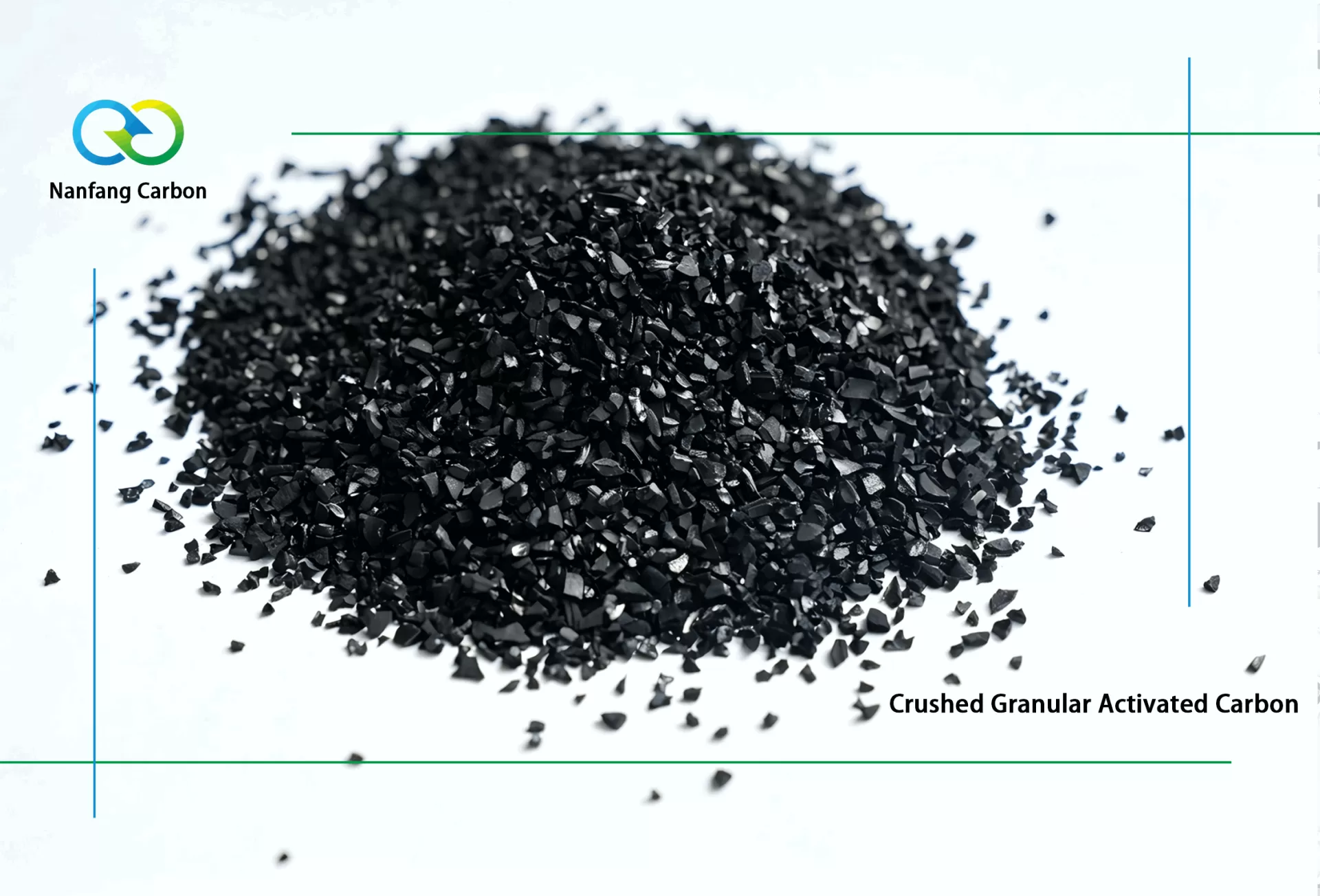
For operations aiming to balance technical performance with regulatory compliance, coconut shell granular activated carbon provides a reliable, high-efficiency adsorption solution. Manufacturers like Nanfang engineer these specialized carbon media to address the demanding purity requirements of modern industrial water and wastewater systems.
Selecting the right filtration media requires looking beyond initial purchase price. This guide examines how coconut-based carbon improves water treatment operations, drives down the total cost of ownership, and outclasses traditional coal-based alternatives.
The Evolving Challenges in Industrial Water & Wastewater Management
Environmental standards are tightening across every major industrial sector. Regulatory bodies across North America, Europe, and Asia continue to lower acceptable discharge thresholds for toxic compounds. Operators can no longer rely on conventional sedimentation or basic sand filtration alone.
One of the steepest hurdles is the containment of per- and polyfluoroalkyl substances (PFAS and PFOS). These persistent industrial chemicals do not degrade easily in nature. Facilities discharge them during chemical manufacturing, metal plating, and firefighting foam deployment, requiring filtration media with high selectivity for micro-pollutants.
Industrial facilities also face growing incentives to recycle process water internally. Closed-loop systems reduce intake fees and mitigate drought risks, but they lead to cyclic build-ups of chemical oxygen demand (COD), disinfection byproducts, and volatile organic compounds (VOCs). If these trace impurities pass through filtration beds, they foul expensive downstream equipment like reverse osmosis (RO) membranes and electro-deionization (EDI) modules.
Why Coconut Shell GAC? Technical Superiority Over Coal-Based Media
Activated carbon performance depends heavily on the carbonaceous precursor used during thermal activation. The two primary raw materials used in industrial treatment are bituminous coal and coconut shells. While coal has historical prominence, coconut shell carbon offers clear structural and mechanical advantages.
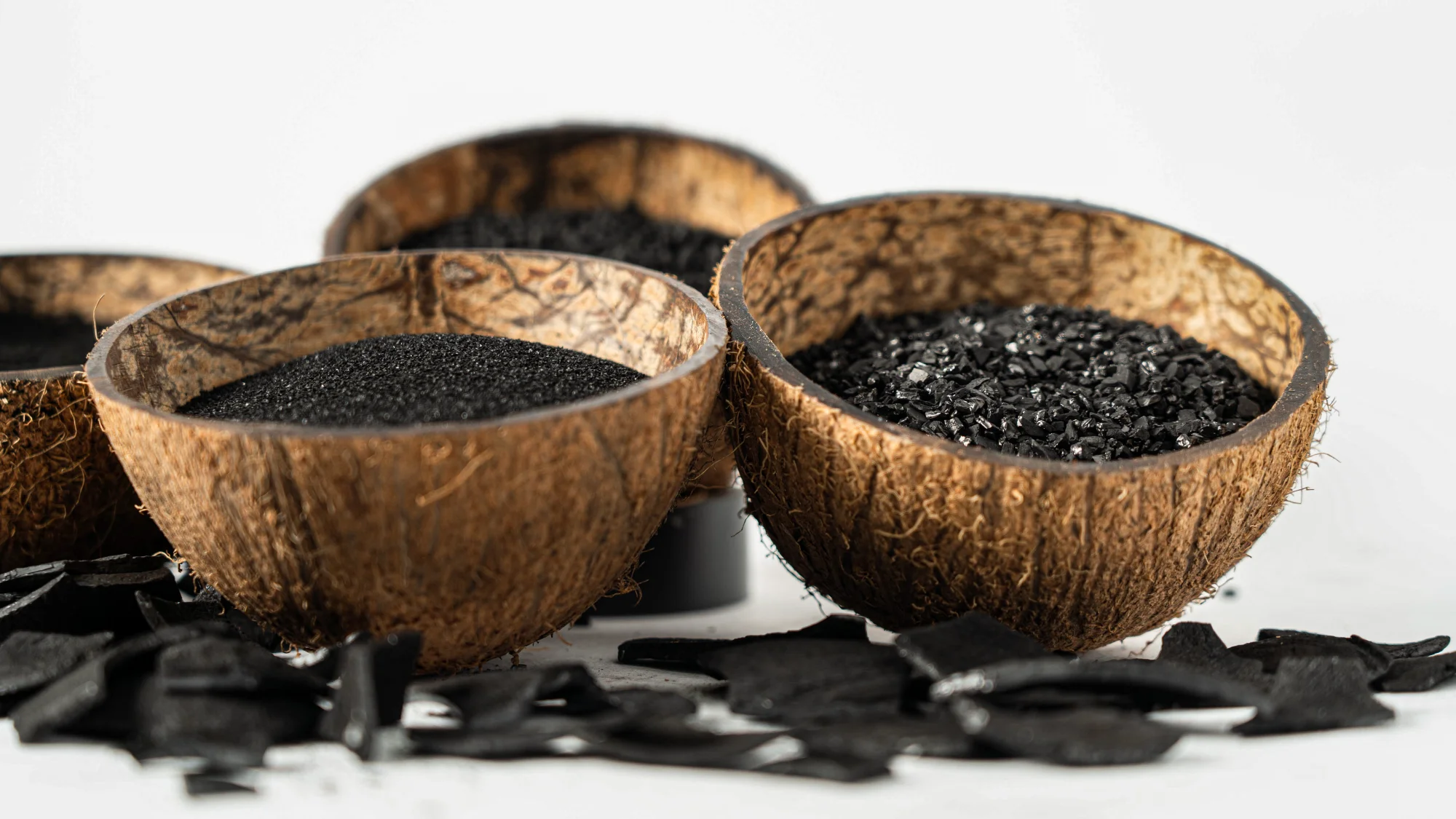
The difference lies in the internal pore matrix. Activation of mature coconut shells produces a predominantly microporous structure, where the internal pore diameters measure less than 2 nanometers. Coal-based carbons, by contrast, feature wider mesopores and macropores.
Predominant Microporosity: The micro-pore distribution matches the molecular dimensions of trace organic contaminants, low-molecular-weight VOCs, and halogenated compounds, facilitating maximum contact adsorption.
Higher Iodine Number: Iodine numbers for coconut shell granular activated carbon routinely exceed 1,050 to 1,200 mg/g. This reflects a larger functional surface area (often above 1,100 m²/g) than coal carbons of comparable mesh size.
Superior Hardness and Attrition Resistance: Coconut shell carbons typically test above 98% to 99% on the Ball-Pan Hardness Scale. Coal-based media are softer, breaking down much faster under mechanical stress.
Lower Ash and Silica Content: Coconut shells are naturally clean, biological precursors. Total ash content rarely exceeds 3% to 5%, whereas coal carbons frequently reach 8% to 15% ash, increasing the risk of heavy metal leaching.
The high physical hardness translates directly to process stability. During routine backwash cycles, carbon granules rub against each other. Softer media degrade into micro-fines that wash out or blind nozzle strainers, generating premature pressure spikes across the vessel.
Critical Industrial Applications: Where Coconut Shell GAC Excels
Because of its clean pore profile and structural resilience, coconut shell GAC serves as the benchmark adsorbent across critical industrial processes.
High-Purity Water for Semiconductors and Pharmaceuticals
Ultrapure water loops require media that absorb impurities without contributing leachables back into the stream. Coal carbons can leach iron, silica, and aluminum into freshly polished water, poisoning mixed-bed ion exchange resins.
Coconut shell media provide near-zero background leaching once rinsed. Water treatment engineers rely on acid-washed variants to reduce total organic carbon (TOC) levels down to parts-per-billion (ppb) thresholds without degrading water conductivity.
Boiler Feedwater and Condensate Polishing
High-pressure steam boilers require rigorous feed pre-treatment to prevent scale formation and tube corrosion. Residual chlorine and chloramines in municipal feed supplies will rapidly oxidize expensive polyamide RO membranes.
Coconut shell granular activated carbon exhibits catalytic properties that dismantle free chlorine through surface reaction rather than simple physical adsorption. The media's tight pores provide ample catalytic sites, providing thorough dechlorination and extending the life of downstream reverse osmosis elements.
Industrial Effluent Polishing and PFAS Remediation
Tertiary wastewater treatment acts as the final environmental barrier before discharge into municipal sewers or surface waterways. Residual pesticides, detergents, aromatic hydrocarbons, and fluorinated compounds often escape primary biological clarifiers.
Passing effluent through a fixed-bed coconut GAC adsorber removes these low-solubility organics reliably. The high surface affinity ensures long run-times even when treating variable wastewater compositions, enabling continuous discharge compliance.
Economic Feasibility: Calculating the Total Cost of Ownership (TCO)
Procurement teams sometimes favor coal-based carbon because of lower initial metric-ton purchase pricing. However, a comprehensive total cost of ownership (TCO) calculation shows that premium coconut shell carbon reduces overall operating expenditures across several budget lines.
Engineers at Nanfang work closely with plant operators to analyze performance metrics across the entire service life of the media. The economic benefits materialize in distinct operational categories:
Extended Bed Life: Higher adsorption capacity per cubic meter means the bed requires fewer change-outs per year. Longer run times directly lower media replacement frequency and disposal fees.
Reduced Media Attrition: Because coconut shells resist mechanical shear, operators lose less media volume during periodic fluidization and backwashing. Plant staff rarely need to top off the bed between major scheduled overhauls.
Lower Energy and Pumping Costs: Intact granules generate clean void spaces without generating hydraulic channeling or fines. Fluid dynamic resistance remains low, cutting kilowatt-hour draw on high-volume feed pumps.
Minimized Production Downtime: Dumping, vacuuming, reloading, and re-bedding an industrial carbon vessel can take an adsorption train offline for days. Fewer change-outs keep production processes running continuously.
The initial purchase price accounts for only a fraction of the total expense. Factoring in labor, freight, downtime, disposal, and pump energy makes coconut shell granular activated carbon the more cost-effective option over multi-year lifecycles.
Key Parameters to Specify When Sourcing Coconut Shell GAC
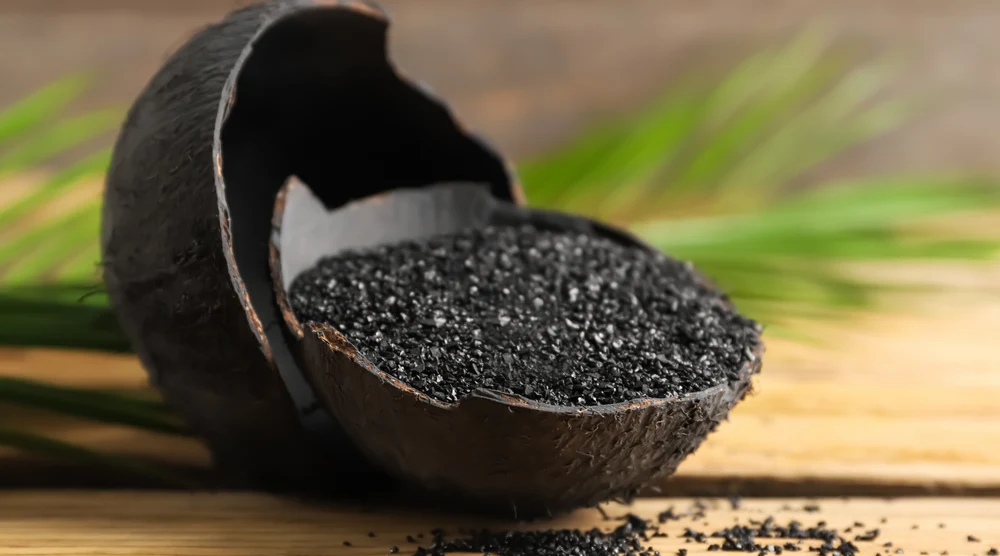
Not all coconut carbons deliver the same filtration output. Raw material maturity, kiln activation control, and post-treatment washing create performance variations across manufacturers. Procurement specifications should define these key technical metrics:
Mesh Size Distribution: Common industrial configurations include 8x30 mesh (for high-flow, low-pressure-drop systems) and 12x40 mesh (for higher kinetic rates in compact vessels). Tight screening reduces undersized particles that cause early bed blinding.
Iodine Number (mg/g): Look for an iodine rating of at least 1,000 to 1,100 mg/g. This standard test index measures micro-pore capacity for smaller organic compounds.
Apparent Density: High-quality coconut shell GAC ranges between 0.48 and 0.54 g/cm³. Excessively low apparent density suggests poor base raw material selection or uneven thermal processing.
Abrasion / Hardness Number: Specify a minimum hardness rating of 98%. This ensures the media withstands continuous hydraulic turbulence and multiple air-scour cycles.
Moisture and Ash Content: Packaging moisture should stay below 3% to 5% by weight. Ash should remain below 4% for standard grades, or below 1% for specialized acid-washed media.
Compliance Certifications: Ensure the product carries NSF/ANSI Standard 61 certification or conforms to AWWA B604 standards if treating water for food processing, pharmaceuticals, or boiler steam that contacts consumable items.
Frequently Asked Questions (FAQ)
Q1: How often does an industrial coconut shell GAC bed need to be
replaced?
A1: Service life depends on incoming contaminant load,
flow rate, and empty bed contact time (EBCT). In dechlorination and clean boiler
feedwater loops, beds routinely run between 2 and 4 years. For high-COD
industrial wastewater polishing, bed life typically ranges from 6 to 18 months
before reaching breakthrough.
Q2: Can spent coconut shell granular activated carbon be thermally
reactivated?
A2: Yes. High-hardness coconut carbons hold up well
during thermal reactivation furnaces. Because the physical structure is
mechanically robust, the media undergoes reactivation with lower volumetric burn
loss than softer coal-based carbons.
Q3: What is the optimal Empty Bed Contact Time (EBCT) for industrial
applications?
A3: Free chlorine removal usually requires an EBCT of
only 2 to 5 minutes due to the catalytic reaction speed. Conversely, trace
organic removal, PFAS capture, and wastewater polishing generally demand an EBCT
between 10 and 20 minutes to achieve target adsorption kinetics.
Q4: Why does coconut shell GAC remove PFAS better than coal
carbon?
A4: While coal carbon adsorbs long-chain PFAS via its larger
transport pores, coconut shell carbon excels at capturing short-chain and
trace-level PFAS compounds. The dense microporous network creates strong Van der
Waals forces that tightly bind small fluorinated molecules.
Q5: What causes rapid pressure drops across an activated carbon
filter bed?
A5: Rapid pressure drops typically stem from suspended
solids loading in the influent, media attrition generating fine carbon dust, or
biofouling within the bed. Using hard coconut shell media minimizes fines
generation, while upstream pre-filtration prevents suspended solids from
blinding the top layers.
Strategic Next Steps: Partner with Nanfang for Your Carbon Solutions
Modern industrial facilities cannot afford unplanned downtime or environmental discharge violations. Upgrading your water treatment trains with high-performance coconut shell granular activated carbon gives your plant reliable adsorption kinetics, extended run-times, and lower total lifecycle operating costs.
Nanfang supplies high-grade coconut shell media tailored to strict industrial water treatment specifications. Our technical engineering team assists EPCs, facility managers, and water specialists with vessel modeling, EBCT sizing, and media selection for specific water profiles.
Ready to optimize your industrial water treatment train? Contact the technical sales team at Nanfang today to request detailed Technical Data Sheets (TDS), review pricing schedules, or order qualification samples for bench-scale pilot trials.
.webp)
.webp)