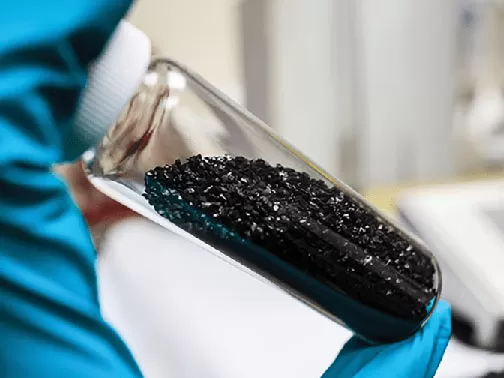
Coal Granular Activated Carbon (GAC): Technical Selection, Pore Dynamics & Industrial Performance
Adsorption technology in continuous fixed-bed systems requires an adsorbent that balances thermodynamic capacity with mechanical robustness. While carbonaceous adsorbents originate from diverse precursors—including coconut shell, peat, and lignocellulosic biomass—coal granular activated carbon remains the standard for large-scale municipal drinking water facilities and heavy industrial wastewater remediation. The heterogeneous molecular composition of industrial effluents and surface waters presents a complex mix of contaminant molecular weights. To process these streams cost-effectively, process engineers rely on the distinctive trimodal pore distribution and physical stability characteristic of coal-based media.
Procuring and deploying coal granular activated carbon requires an evaluation of fluid mechanics, pore size distributions, attrition resistance, and life-cycle economics. As a dedicated manufacturer of industrial adsorption solutions, Nanfang examines the core engineering principles, selection criteria, and operational mechanics that determine optimal bed performance.
.webp?t=1790233113926 "coal granular activated carbon")
Precursor Petrology and Pore Size Distribution (PSD)
The performance of coal granular activated carbon is heavily determined by the geological classification (coal rank) of its base precursor. Raw coals vary significantly in volatile matter content, carbon structure, and intrinsic inorganic matter:
Bituminous Coal: The industry benchmark for high-stress liquid-phase applications. Bituminous coal yields a balanced, polymodal (or trimodal) pore structure containing high volumes of micropores, mesopores, and macropores. Its natural hardness minimizes breakdown during thermal processing.
Sub-Bituminous Coal: Characterized by higher volatile matter and moderate mechanical strength. It yields an open pore system suitable for removing intermediate-to-large color bodies, though it offers lower abrasion resistance than bituminous precursors.
Anthracite: Boasting the highest fixed carbon content, anthracite produces a predominantly microporous structure with exceptional mechanical density. However, its low natural reactivity requires aggressive thermal activation with steam or carbon dioxide to develop sufficient operational pore volume.
Lignite: Characterized by high moisture, lower density, and elevated macroporosity. Lignite-derived carbons excel at decolorization and macro-colloidal adsorption, but they exhibit lower volumetric adsorption capacity and lower mechanical hardness.
The Trimodal Pore Matrix
Unlike coconut shell GAC—which consists of more than 85–90% narrow micropores (< 2 nm)—bituminous coal granular activated carbon features a well-developed, interconnected transport network:
Macropores (> 50 nm): Serve as low-resistance conduits for fluid transport directly into the internal particle interior.
Mesopores (2 to 50 nm): Function as critical entry routes for mid-to-large molecular weight species, such as natural organic matter (NOM), humic/fulvic acids, and large synthetic organic chemicals.
Micropores (< 2 nm): Provide the primary surface area (> 900–1,100 m²/g) responsible for adsorbing low molecular weight volatile organic compounds (VOCs), halogenated hydrocarbons, and trace pesticides.
Without adequate mesoporosity, the entry paths to internal micropores become sterically hindered by larger organic compounds. This kinetic fouling phenomenon frequently degrades coconut-based carbons when treating high-TOC (Total Organic Carbon) raw water.
Critical ASTM Parameters for Procurement and Quality Control
Evaluating coal granular activated carbon requires looking beyond baseline cost per metric ton. Process engineers and plant procurement teams evaluate technical data sheets based on standardized ASTM parameters that govern operating life and hydraulic compatibility.
Iodine Number (ASTM D4607): Expressed in mg/g, this metric measures micropore development (specifically pores with dimensions around 1.0 to 1.5 nm). Typical virgin bituminous carbons range from 900 mg/g to over 1,050 mg/g.
Molasses Number / Decolorizing Index: Measures mesopore development and the capacity to capture high molecular weight color bodies and complex organics. A high molasses number correlates with extended bed life when handling complex organic streams.
Hardness / Abrasion Number (ASTM D3802): Quantifies the media's resistance to mechanical degradation and attrition. Bituminous coal granular activated carbon typically exhibits a ball-pan hardness rating of 90–95. High hardness prevents particle breakdown, fines generation, bed compaction, and head loss during repetitive hydraulic backwashing and thermal reactivation cycles.
Apparent Density (ASTM D2854): Ranges between 0.44 and 0.52 g/cm³ for quality bituminous grades. Denser carbons supply more active mass per unit volume of adsorber, extending the run time between bed changeouts.
Ash Content and Composition (ASTM D2866): Total ash reflects residual inorganics (silica, alumina, iron oxides). Low acid-soluble ash is critical to prevent leaching of secondary metals (e.g., arsenic, iron, aluminum) during reactor startup, especially in potable water treatment. Nanfang applies dedicated post-activation acid washing when client applications require high-purity limits.
Hydraulic Design: Particle Sizing, Pressure Drop, and Contact Time
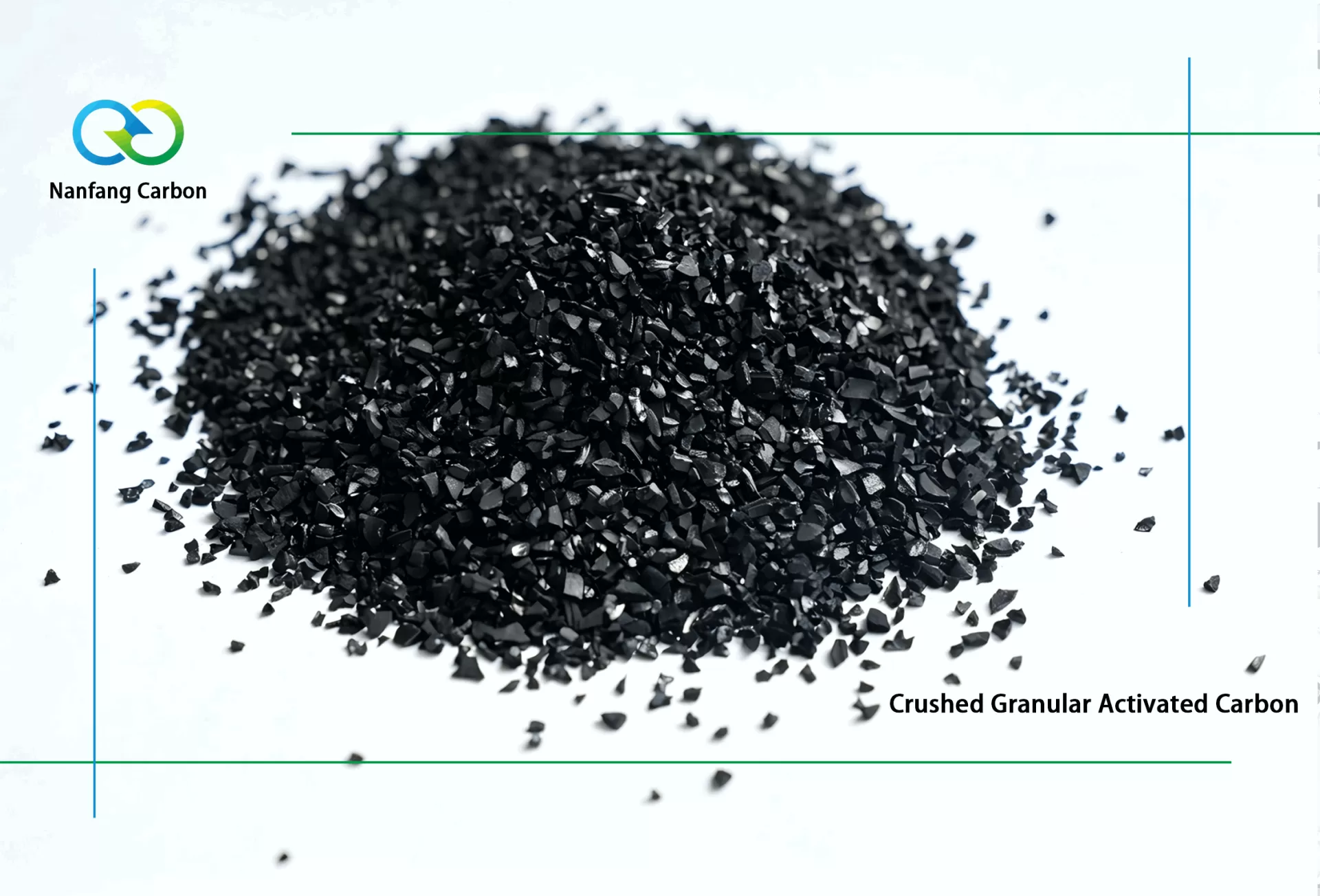
Selecting mesh sizing for coal granular activated carbon requires balancing kinetic mass transfer against bed pressure drop. The two most common standard size classifications are 8x30 US Mesh and 12x40 US Mesh.
8x30 US Mesh (approx. 0.60 to 2.36 mm): Demonstrates lower hydraulic head loss per foot of bed depth. It is preferred for high-flow-rate systems, high-viscosity streams, or systems reliant on gravity-fed hydraulic configurations.
12x40 US Mesh (approx. 0.42 to 1.70 mm): Offers smaller mean particle diameters, shortening the intraparticle diffusion distance. This yields faster adsorption kinetics and a narrower Mass Transfer Zone (MTZ). However, it produces a steeper hydraulic pressure drop curve, requiring higher backwash velocities and greater pumping energy.
Adsorber sizing hinges on optimizing the Empty Bed Contact Time (EBCT):
$$\text{EBCT} = \frac{\text{Bed Volume (m}^3\text{)}}{\text{Volumetric Flow Rate (m}^3\text{/h)}} \times 60$$
For municipal taste and odor compounds (geosmin, 2-MIB), an EBCT of 10 to 15 minutes is typical. In contrast, complex industrial wastewater containing recalcitrant COD or persistent environmental pollutants, such as per- and polyfluoroalkyl substances (PFAS: PFOA, PFOS, GenX), often requires an EBCT of 15 to 25 minutes or a lead-lag configuration to prevent premature breakthrough.
Industrial and Environmental Remediation Applications
The versatility of coal granular activated carbon makes it a core process component across varied engineering disciplines:
Advanced Potable Water Purification
Coal GAC targets broad-spectrum disinfection byproduct (DBP) precursors, including trihalomethanes (THMs) and haloacetic acids (HAAs). Its broad pore size distribution proves especially advantageous over micro-exclusive media when handling seasonal spikes in algal organic matter and dissolved natural organics.
PFAS and Emerging Contaminant Abatement
Regulatory agencies continue to drive maximum contaminant levels (MCLs) for perfluorinated alkyl substances down to parts-per-trillion (ppt) thresholds. Coal granular activated carbon efficiently removes both long-chain and intermediate-chain fluorinated compounds, operating as a standalone barrier or as an upstream guard bed protecting downstream ion-exchange (IX) resin systems.
Industrial Effluent and Chemical Processing
In high-COD chemical process streams, petrochemical plants, and pharmaceutical production, coal-based media removes heavy cyclic aromatics, surfactants, biocides, and chlorinated solvents. Its resistance to physical fragmentation permits operation at elevated fluid velocities without significant bed channeling.
.webp?t=1790233113926 "coal granular activated carbon")
Operational Life Cycle: Reactivation, Economics, and Safety Protocols
Operating a coal granular activated carbon system over its multi-year life cycle involves several maintenance, re-bedding, and regulatory considerations:
Thermal Reactivation Economics: Once exhausted, spent coal GAC can undergo thermal reactivation in rotary kilns or multiple-hearth furnaces at temperatures above 800°C. This process volatilizes and pyrolyzes adsorbed organic pollutants while restoring pore networks with typical mass losses of 5% to 10%. Bituminous coal GAC is particularly suited for multiple reactivation cycles because its initial mechanical hardness limits attrition during handling and thermal transport.
Backwashing and Bed Stratification: Periodic hydraulic backwash fluidization (typically 25% to 40% bed expansion) is critical to flush out suspended solids and re-stratify the carbon bed, eliminating preferential flow paths (channeling) that shorten breakthrough times.
Confined Space Safety and Oxygen Depletion: Damp activated carbon acts as an active oxygen scavenger within enclosed vessels, adsorbing oxygen gas rapidly. Plant operators and maintenance personnel must treat any depleted or virgin GAC vessel as a permit-required confined space. Vessel atmospheres must be continuously monitored for oxygen depletion and volatile contaminants prior to and during any manual changeouts or inspections.
Frequently Asked Questions (FAQ)
1. How does coal granular activated carbon compare directly to coconut shell carbon in water treatment?
Coconut shell carbon features primarily micropores (< 2 nm), making it effective for capturing low-molecular-weight compounds like trihalomethanes and small chlorinated solvents. However, bituminous coal granular activated carbon provides a balanced trimodal distribution (micropores, mesopores, and macropores). This wider matrix allows coal GAC to capture larger molecules, such as humic substances, natural organic matter (NOM), and dye compounds, which would quickly foul the narrow outer pores of coconut shell media.
2. Can coal granular activated carbon remove iron, manganese, and nitrates from groundwater?
Standard coal GAC does not remove inorganic ions such as nitrates, iron, or manganese through physical adsorption. Removing iron and manganese typically requires upstream aeration and catalytic or greensand filtration to oxidize and precipitate the metals. Nitrates require dedicated ion-exchange resins or reverse osmosis. GAC can remove trace heavy metals only when they are bound within larger organic complexes or if the carbon surface has been specifically chemically modified.
3. What are the key indicators that a GAC bed has reached breakthrough and requires replacement?
Breakthrough is identified via targeted analytical testing of the effluent stream downstream of the vessel. Common indicators include elevated Total Organic Carbon (TOC) levels, UV-254 absorbance spikes (signaling organic breakthrough), the return of process odors or tastes, or target contaminants (such as PFAS or specific VOCs) surpassing permitted discharge or drinking water regulatory limits. Differential pressure gauges should also be monitored, as rising delta-P indicates mechanical fouling and bed compaction.
4. Why is backwashing important after loading new coal GAC into an adsorber?
Virgin GAC contains fine particulate dust generated during manufacturing, packaging, and bulk transport. Initial backwashing flushes these carbon fines out of the vessel before placing it into service, preventing downstream particulate contamination. Backwashing also fluidizes and stratifies the carbon bed, distributing particle sizes from coarse (bottom) to fine (top), which optimizes hydraulics and mitigates premature head loss during process runs.
5. Is thermal reactivation suitable for all types of spent coal GAC?
Thermal reactivation is feasible for most municipal and industrial coal GAC applications, offering substantial cost and lifecycle-carbon savings compared to virgin media replacement. However, carbon that has adsorbed elevated levels of heavy metals (e.g., mercury, lead), radioactive materials, or specific toxic halogenated byproducts may be categorized as hazardous waste. Such spent carbon may be restricted by air permitting or waste disposal standards, preventing standard thermal reactivation.
Engineered Adsorption Solutions from Nanfang
Selecting the right coal granular activated carbon depends on matching pore-size distribution, mesh dimensions, and mechanical durability to your specific feed characteristics. Nanfang manufactures high-performance bituminous coal-based activated carbons engineered to maximize throughput, extend bed run-time, and control system operating costs. Our technical engineering team provides custom particle size grading, iodine/ash specifications, pressure-drop profiling, and pilot run assessments tailored to your municipal or industrial facility.
Contact our chemical process and technical sales engineers today to request comprehensive product specifications, arrange sample evaluations, or review custom bulk pricing for your operational footprint.
.webp)
.webp)