
High Iodine Value Activated Carbon Specifications, Testing, and Application Guide
Adsorption media selection dictates the operational efficiency, footprint, and operating expenditure of modern industrial separation units. Process engineers frequently specify high iodine value activated carbon when designing continuous adsorption columns where trace-level organic contaminants, volatile species, or low-molecular-weight compounds must be captured reliably.
The iodine number serves as a primary benchmark for evaluating carbon activation levels and microporous capacity. Understanding how this metric correlates with physical surface chemistry, precursor selection, hydrodynamic stability, and operational life enables plant managers to maximize treatment efficiency while reducing media replacement frequency.
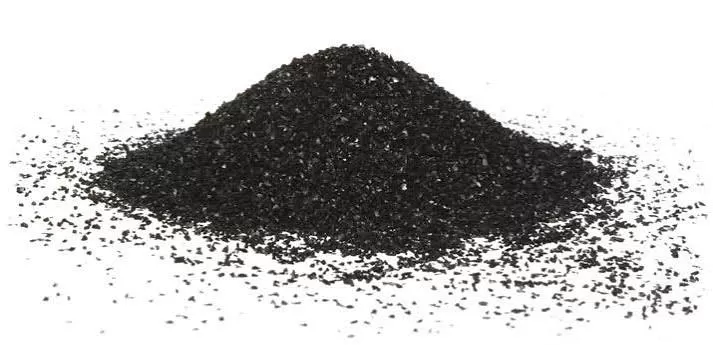
Understanding Iodine Value and Micropore Surface Area
The iodine value measures the milligrams of elemental iodine adsorbed from an aqueous solution by one gram of activated carbon under standardized conditions. Conducted according to ASTM D4607, this test operates via a three-point isotherm titration using standard iodine and sodium thiosulfate solutions. The resulting number directly reflects the media's internal pore surface area within the microporous region, specifically pores with diameters smaller than 2.0 nanometers (20 Ångströms).
Because the iodine molecule has a kinetic diameter of approximately 0.56 nanometers, it penetrates the deep micropores created during thermal activation. An iodine number of 1000 mg/g typically correlates to a specific surface area of approximately 1000 to 1050 m²/g measured by standard Brunauer-Emmett-Teller (BET) nitrogen adsorption isotherms. Carbon matrices exhibiting values between 1050 mg/g and 1300 mg/g represent highly developed internal networks tailored for high-affinity target capture.
Ultra-micropores (< 0.7 nm): Capture small permanent gases, halogenated solvents, and low-molecular-weight volatiles.
Super-micropores (0.7 nm – 2.0 nm): Retain volatile organic compounds, trihalomethanes, pharmaceutical residuals, and low-weight aromatics.
Mesopores (2.0 nm – 50 nm): Serve primarily as transport channels to facilitate diffusion toward internal microporous sites.
Macropores (> 50 nm): Provide physical entry paths for fluid flow, housing bulk transport rather than direct adsorption sites.
Raw Material Precursors and Manufacturing Kinetics
The selection of starting raw materials establishes the baseline pore morphology and physical durability of the finished carbon. Activated carbon can be derived from several carbonaceous sources, each imparting distinct structural features during carbonization and subsequent activation.
Precursor Characteristics
Coconut Shell: Offers a dense, high-purity carbon matrix with low natural ash. It yields a predominantly microporous structure (up to 85–90% micropores), making it the premier source for producing media with iodine ratings exceeding 1100 mg/g.
Bituminous Coal: Generates a trimodal pore distribution with a balanced ratio of micropores, mesopores, and macropores. It provides high physical density and mechanical strength suitable for heavy industrial wastewater treatment.
Anthracite Coal: Possesses high fixed carbon content, producing durable media suited for fixed-bed reactors requiring moderate-to-high iodine values combined with structural resilience.
Wood and Lignocellulose: Naturally forms open, mesoporous and macroporous networks. While effective for decolorization, wood-based carbons require specialized activation parameters to reach high microporous iodine values.
Activation Thermodynamics
Thermal activation involves gasifying the carbonized precursor using steam, carbon dioxide, or flue gas blends at temperatures ranging from 850°C to 1000°C. Steam molecules react endothermically with internal carbon atoms, selective gasification etching deep microporous fissures into the graphitic basal planes.
Through precise atmospheric control during steam activation, Nanfang balances thermal exposure and residence time to prevent excessive pore widening. Uncontrolled burn-off causes micropores to collapse into mesopores, lowering the iodine number and degrading mechanical hardness. Regulating steam partial pressures and bed turnover rates ensures that internal surface development remains focused within the targeted 1.0 to 1.5 nanometer range.
Comparative Evaluation: Iodine Value vs. Other Adsorption Indices
Relying solely on iodine metrics can lead to inaccurate system modeling if the targeted contaminants do not match the size of an iodine molecule. Industrial adsorption media must be evaluated through a matrix of complementary analytical parameters.
Methylene Blue Value
The methylene blue index measures the adsorption of a larger organic molecule with a molecular dimension of approximately 1.5 nm to 1.7 nm. This index assesses the mesoporous volume of the carbon. A carbon with a high iodine rating but an exceptionally low methylene blue number will struggle to adsorb high-molecular-weight natural organic matter, color bodies, or humic acids.
Carbon Tetrachloride (CTC) and Butane Working Capacity
In vapor-phase applications, Carbon Tetrachloride (ASTM D3467) and Butane Working Capacity (ASTM D5228) serve as direct measurements of gaseous adsorption. A high iodine value activated carbon typically exhibits a CTC activity between 60% and 85%, indicating high holding capacity for organic vapors, hydrocarbon streams, and volatile industrial emissions.
Physical Durability and Ball-Pan Hardness
Increasing activation duration to drive iodine numbers past 1200 mg/g can thin internal pore walls, reducing the physical integrity of the carbon granules. Standard production batches from Nanfang maintain consistent hardness indices above 97% on the ASTM D3802 ball-pan hardness scale. This prevents particle attrition, fines generation, and premature pressure-drop buildup in high-flow granular beds.
Performance in Demanding Industrial Operations
The physical chemistry of high-activity media translates directly into distinct operational advantages across specialized purification workflows.
Ultrapure Water and Semiconductor Processing
Semiconductor fabrication requires total organic carbon (TOC) levels below single-digit parts-per-billion (ppb). Coconut-shell-derived media with iodine values of 1100–1200 mg/g efficiently adsorb trace chlorinated hydrocarbons, trihalomethanes, and small breakdown organics that bypass reverse osmosis membranes. The low baseline ash and acid-washed purity prevent the leaching of silica, sodium, or heavy metals into the ultra-pure water loop.
Pharmaceutical Intermediate Purification
Active Pharmaceutical Ingredient (API) synthesis requires media capable of adsorbing residual solvents, heterocyclic side-products, and catalyst residues without stripping high-molecular-weight API compounds from solution. Selecting an iodine-optimized matrix with tailored microporosity prevents product yield loss while stripping trace impurities.
Gas-Phase VOC Capture and Solvent Recovery
In thermal oxidizer inlet abatement and solvent recovery loops, high micropore density enables deep-bed VOC capture at very low partial pressures. The steep adsorption isotherms associated with these carbons ensure sharp mass transfer zones, maximizing the saturation capacity before column breakthrough occurs.
Trace Micropollutant and PFAS Removal
Municipal water treatment facilities facing stringent discharge limits for per- and polyfluoroalkyl substances (PFAS), micro-pollutants, and endocrine-disrupting chemicals rely on microporous media. When treating low-concentration, high-flow water sources, the deployment of high iodine value activated carbon guarantees minimal organic leakage over extended operating cycles.
Operational Considerations: Flow Dynamics and Media Life
Translating media capacity into service life requires accurate column sizing, hydraulic design, and regeneration strategies.
Empty Bed Contact Time (EBCT) and Mass Transfer Zone (MTZ)
Higher iodine numbers directly compress the length of the Mass Transfer Zone inside fixed-bed vessels. Because the internal diffusion rate and surface attraction are higher, target molecules adsorb rapidly near the inlet. This kinetic profile allows systems to operate with shorter Empty Bed Contact Times (typically 10 to 20 minutes in liquid applications) without organic slip, reducing vessel volume requirements.
Hydraulic Management and Pressure Differential
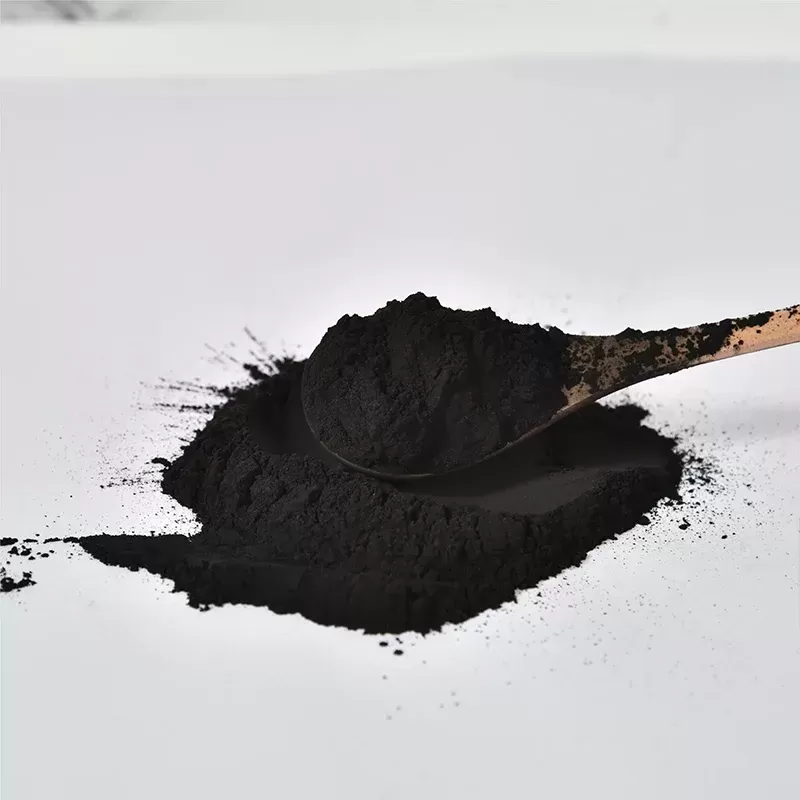
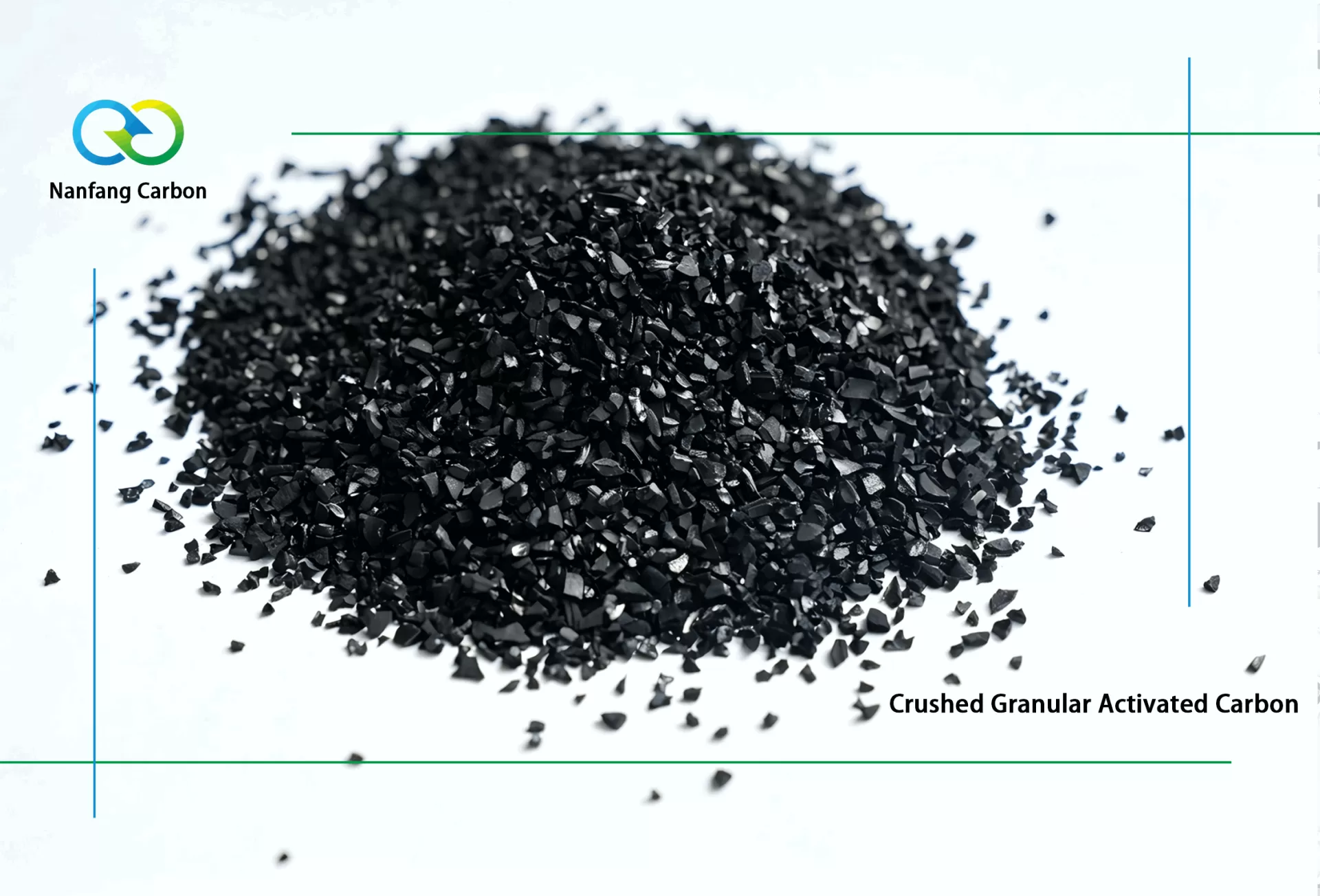
Porous media must withstand continuous fluid flow without compaction. Granular activated carbon (GAC) is commonly supplied in 8x30, 12x40, or 20x50 mesh sizes, while extruded pellets (EAC) are sized at 3 mm, 4 mm, or 9 mm. Sizing the particle diameter balances surface-accessible kinetics with hydraulic headloss, keeping pumping energy requirements within design specifications.
Reactivation Economics
High-grade virgin carbons preserve sufficient structural wall thickness to survive multiple thermal reactivation cycles. During reactivation in rotary or multiple-hearth furnaces, a controlled burn removes pyrolyzed organic adsorbate. Starting with an initial iodine value above 1050 mg/g ensures that the reactivated product retains an operational iodine level (often 850–950 mg/g), extending the total asset life cycle across repeated regeneration campaigns.
Frequently Asked Questions
How does a higher iodine number influence media bed life in liquid systems?
In applications targeting low-molecular-weight organics and chlorinated compounds, a higher iodine number represents more adsorption sites per unit volume. This delays the saturation point of the carbon bed, extending run times between changeouts, reducing replacement frequency, and lowering annualized operating costs.
Can high iodine media remove high-molecular-weight humic substances effectively?
Not always. High iodine values signify dense microporosity (< 2 nm). Large humic acids and tannin molecules often measure between 2 and 10 nm, requiring mesoporous structures. For streams with heavy natural organic matter, selecting a carbon with balanced iodine and methylene blue numbers yields better overall performance.
What is the relationship between iodine value and BET specific surface area?
There is a strong linear correlation between the two values for virgin activated carbons. As a practical engineering rule of thumb, multiplying the iodine value (in mg/g) by a factor of 1.0 to 1.05 provides an estimate of the BET surface area (in m²/g), though specific precursor chemistry can introduce minor variations.
Why does mechanical hardness sometimes decrease as the iodine number rises above 1200 mg/g?
Achieving very high iodine numbers requires aggressive steam activation, which gasifies more internal carbon mass. If activation continues too long, the carbon wall partitions become thin, reducing mechanical crush strength and increasing the rate of fine generation under hydraulic stress.
How does acid washing impact high iodine carbon properties?
Acid washing removes soluble inorganic ash components, such as acid-soluble iron, calcium, magnesium, and silica. This process de-clogs blocked micropores, slightly increases available iodine adsorption capacity, and prevents pH spikes or mineral leaching upon system startup.
Which industries prioritize high iodine coconut shell carbon over coal carbon?
Semiconductor manufacturing, point-of-use drinking water filtration, high-purity solvent purification, and catalyst support applications prefer coconut shell media. Its tight micropore distribution, negligible mineral ash, and superior attrition resistance deliver high separation precision.
Submit your water analysis or gas stream parameters to Nanfang for tailored media sizing, breakthrough curve simulations, and direct product quotations.
Request an Engineering Consultation & Quote
.webp)