Coal Based Granular Activated Carbon vs. Coconut Shell: Which Is Right for Your Project?
Selecting the correct filtration media directly determines your plant's operating costs, treatment efficiency, and compliance track record. Plant engineers often evaluate whether coconut shell or coal based granular activated carbon delivers the best performance across continuous liquid and gas treatment systems. While coconut shell carbon has clear utility in residential tap water and trace contaminant polishing, heavy industrial processes demand a far more rugged adsorption profile.
Nanfang manufactures engineered activated carbon media designed to solve complex industrial discharge and emission challenges. If your plant is designing a new adsorber vessel or reviewing annual media replacement budgets, contact our technical team today to request product samples, dynamic column test data, or bulk FOB/CIF pricing.
1. Understanding Coal Based Granular Activated Carbon: Raw Materials and Processing
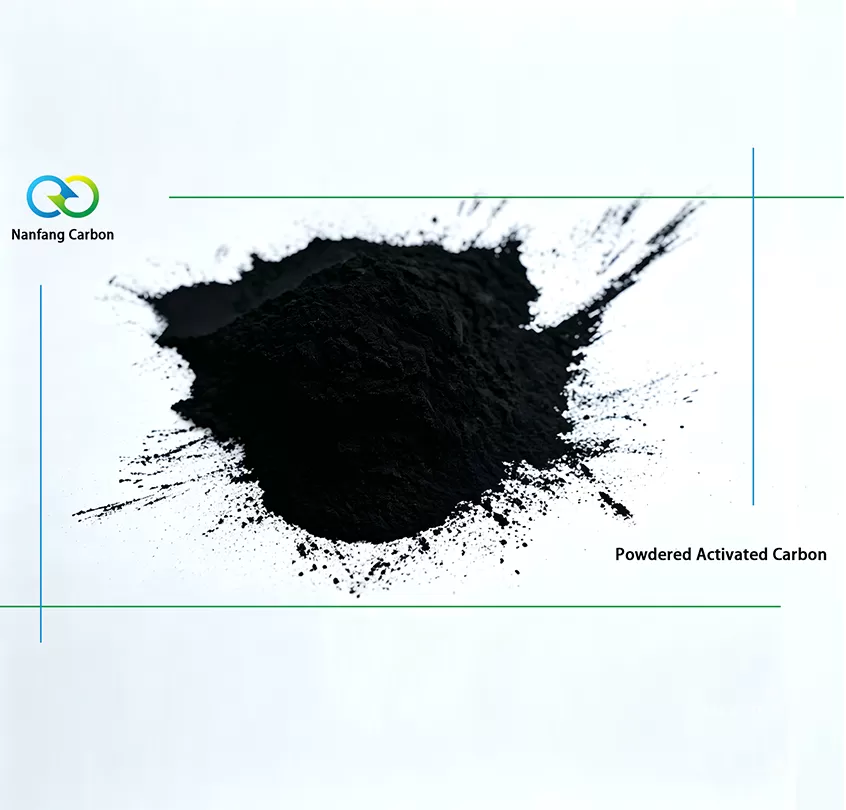
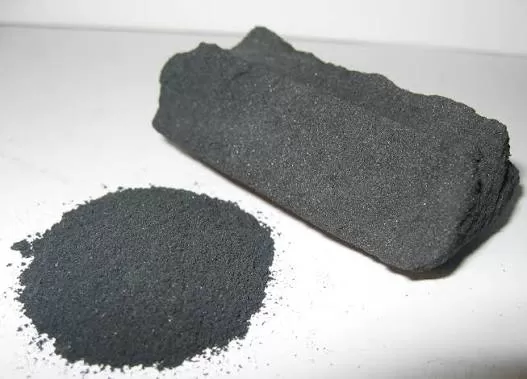
Activated carbon performance begins at the raw material stage. Coconut shell media derives from botanical precursors rich in dense cellulosic structures. In contrast, coal based granular activated carbon originates from fossil fuel deposits, primarily bituminous coal, sub-bituminous coal, and anthracite coal.
The manufacturing process involves two core stages:
- Carbonization: The raw coal undergoes thermal pyrolysis in an oxygen-depleted kiln at temperatures between 500°C and 700°C. This drives off volatile organic matter and builds an initial carbonaceous framework.
- Steam Activation: The carbonized material enters high-temperature activation kilns operating between 850°C and 1000°C under controlled steam and carbon dioxide injection. The controlled oxidizing gas etches the carbon matrix, generating millions of internal cavities.
The geological origin of coal produces a fundamentally different internal pore architecture compared to coconut shells. Coconut shells produce tight, uniform micropores under 2 nanometers. Bituminous coal based GAC yields a broad internal pore network containing high volumes of transitional mesopores (2 to 50 nm) and macropores (greater than 50 nm). This structural disparity dictates how molecules navigate into the carbon particle under variable dynamic flows.
2. Pore Structure Dynamics: Why Coal Based Granular Activated Carbon Excels in Industrial Applications
Pore diameter distribution determines dynamic adsorption kinetics in continuous-flow fixed-bed contactors. Engineers often refer to the pore network inside coal based granular activated carbon as an internal transport highway. The wide macropores on the outer surface act as entry ramps, the mesopores function as multi-lane transit routes, and the terminal micropores act as final parking bays for target molecules.
Coconut carbon consists almost entirely of terminal micropores with minimal mesoporous access. When applied to industrial wastewater containing complex organic matrices, coconut carbon rapidly suffers from pore blockage. High molecular weight contaminants—such as humic acids, lignins, surfactants, and color bodies—wedge themselves at the outer pore entrances, blinding the interior surface area before deep adsorption can occur.
The mesopore structure of coal based media eliminates this premature fouling mechanism:
- Direct Mesopore Capture: Molecules with molecular weights exceeding 500 Da migrate freely into mesopores without stalling at the exterior surface.
- Accelerated Diffusion Rates: Low mass-transfer zone (MTZ) length allows faster flow rates and shorter empty bed contact times (EBCT).
- Extended Breakthrough Curves: In complex industrial waste streams, coal based media delays the breakthrough point, maintaining effluent compliance over longer bed life cycles.
By preventing rapid surface blinding, coal based carbon delivers flat, predictable breakthrough curves under high chemical oxygen demand (COD) fluctuations.
3. Key Technical Specifications and Selection Parameters for Coal Based Granular Activated Carbon
Procuring media for municipal or industrial facilities requires evaluating specific technical parameters rather than relying on standard catalog numbers. The table below outlines how bituminous coal media compares against standard coconut shell carbon across critical performance metrics.
| Specification Metric | Coal Based Granular Activated Carbon | Coconut Shell GAC | Engineering Significance |
|---|---|---|---|
| Dominant Pore Type | Mesoporous & Macroporous (2–50+ nm) | Microporous (<2 nm) | Determines molecular size capture capability |
| CTC Value (Carbon Tetrachloride) | 50% – 75%+ | 40% – 60% | Measures gas-phase volatile organic adsorption |
| Iodine Number | 850 – 1050 mg/g | 1000 – 1200 mg/g | Indicates low molecular weight micro-capacity |
| Hardness Number | 90% – 95% | 97% – 99% | Resistance to breakdown during backwash cycles |
| Apparent Bulk Density | 0.45 – 0.55 g/cm³ | 0.48 – 0.52 g/cm³ | Dictates vessel fill weight and tonnage |
| Ash Content (Standard vs. Acid Washed) | 6% – 12% (Acid-washed: <3%–5%) | 3% – 5% | Impacts initial effluent pH spikes and rinse volumes |
Particle Size Distribution (Mesh Sizes)
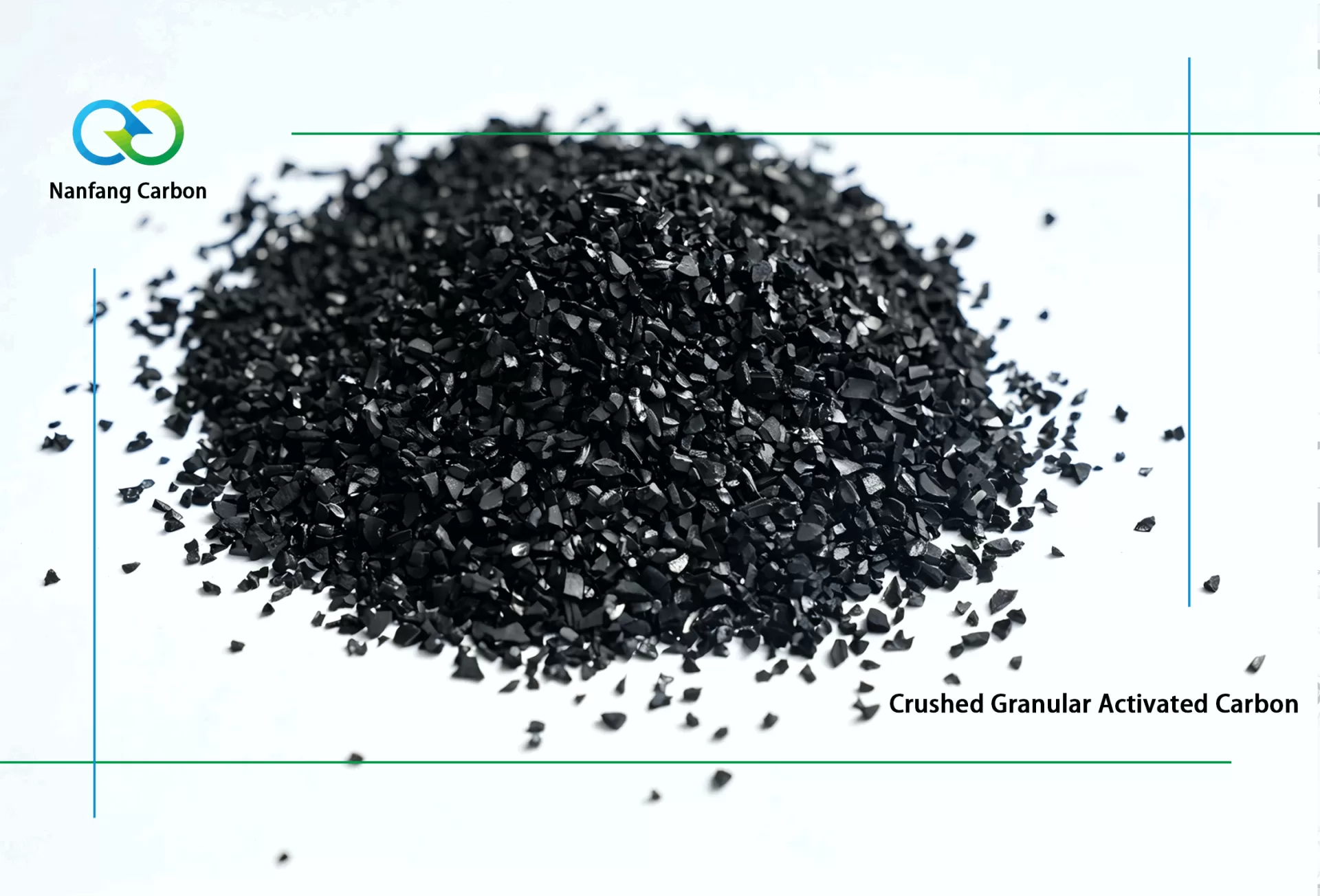
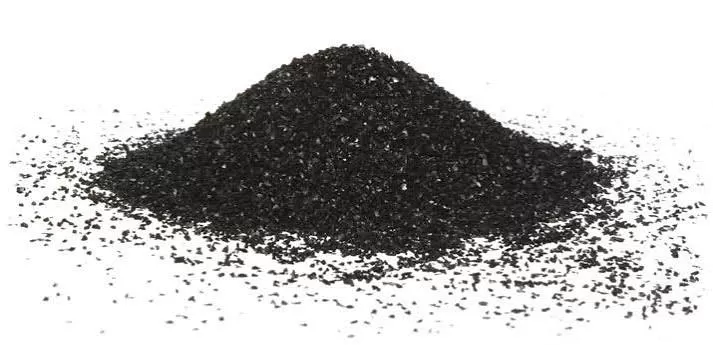
The standard industrial sizes for coal based media are 8x30 mesh and 12x40 mesh. The larger 8x30 mesh is optimal for high-flow liquid systems and gas emission beds where engineers must minimize system pressure drop across deep beds. The 12x40 mesh offers faster adsorption kinetics and shorter mass-transfer zones, making it suitable for compact liquid treatment vessels.
Carbon Tetrachloride (CTC) vs. Iodine Number
While municipal drinking water plants often emphasize iodine numbers, gas-phase industrial engineers focus on the CTC value. The CTC metric indicates an activated carbon's capacity to adsorb heavier molecular weight hydrocarbons. Bituminous coal carbon consistently delivers CTC ratings between 50% and 75%, outperforming coconut shell media in complex solvent extraction applications.
Mechanical Hardness and Hydraulic Stability
Industrial deep-bed contactors require frequent fluidization and backwashing to clear suspended solids. Nanfang manufactures coal based media with hardness ratings exceeding 92% to 95%. This mechanical strength prevents particle attrition, reduces backwash fines, and protects downstream filtration systems from carbon carryover.
For operations sensitive to mineral leaching and pH spikes, Nanfang supplies acid-washed bituminous coal grades that lower total ash levels below 4%, ensuring pristine effluent discharge.
4. Industrial Projects Where Coal Based Granular Activated Carbon Is Irreplaceable
Certain industrial projects experience poor run-times and frequent bed failures when operating with purely microporous botanical carbons. In the following environments, coal based granular activated carbon serves as the reliable industry standard.
Industrial Wastewater with Complex COD Matrices
Petrochemical plants, textile dye houses, coal chemical operations, and pharmaceutical factories discharge effluents laden with bulky aromatic rings, synthetic dyes, and synthetic surfactants. Coconut carbon blinds within days in these conditions.
Bituminous coal based GAC absorbs these bulky target molecules across its deep mesoporous channels, providing sustained organic reduction, dependable COD compliance, and excellent resistance to hydraulic load swings.
Municipal Drinking Water and Ozone-BAC Systems
In advanced water treatment facilities running ozone-biological activated carbon (O3-BAC) stages, coal based media is unmatched. The natural surface roughness, combined with abundant macropores and mesopores, creates an ideal substrate for beneficial bacterial colonization.
Biofilms anchor securely inside the larger pore recesses without washing out during vigorous air-scour backwashes. Coconut shell carbon features an overly smooth, tight surface that discourages biological colonization, making it unsuitable for sustained biofiltration.
High-Flow Industrial VOC Abatement and Solvent Recovery
Gas-phase treatment of emissions containing blended aromatic solvents—including benzene, toluene, xylene, and heavy ketones—requires strong internal transport kinetics. Coal based granular activated carbon adsorbs these large gas-phase molecules efficiently and releases them completely during steam or nitrogen regeneration cycles. Coconut carbon binds heavy hydrocarbons too tightly inside its narrow micropores, leading to heel buildup and severe capacity loss over time.
Coconut shell carbon remains ideal for niche applications such as trace chlorine removal in tap water, gold recovery circuits, and semiconductor ultra-pure water loops. For heavy industrial work, coal based media remains the primary engineering choice.
5. Total Cost of Ownership (TCO) and ROI of Coal Based Granular Activated Carbon
Evaluating activated carbon solely on initial purchase price per pound leads to poor operational budgeting. Procurement teams must examine the total cost of ownership across the entire service life of the media bed.
Capital Expenditure and Procurement Stability
Coconut shell production concentrates in coastal tropical regions across Southeast Asia and India. Monsoon weather patterns, raw shell harvest cycles, and localized agricultural disruptions frequently drive sharp volatility in raw material availability and pricing.
Industrial coal reserves remain geographically distributed and free from seasonal harvesting bottlenecks. Large industrial facilities secure predictable multi-year contracts through bulk procurement of coal based carbon, often realizing initial unit purchase savings between 20% and 40% compared to equivalent botanical grades.
Thermal Reactivation Performance
The true cost-efficiency of coal based granular activated carbon emerges during thermal reactivation cycles. Saturated carbon contains valuable energy and material value. Industrial operators periodically extract spend carbon and send it to rotary kilns or multiple hearth furnaces to burn off adsorbed organics and re-expose the carbon structure.
Bituminous coal carbon demonstrates exceptional structural resilience through repeated thermal cycles:
- Sustained Yield: Hard coal media survives the high shear inside thermal reactivation furnaces with low attrition losses (typically under 7% to 9% per cycle).
- Pore Integrity: The robust fossil carbon matrix avoids the thermal collapse that thin-walled coconut micropores often suffer under reactivation temperatures.
- Multiple Cycle Life: Coal based media undergoes 3 to 5 thermal reactivation cycles while retaining over 85% to 90% of its original virgin adsorption capacity.
A plant amortizing its carbon costs over three to five reactivation cycles dramatically lowers its net filtration cost per 1,000 gallons of treated wastewater.
6. Engineering Decision Matrix: Selecting Your Project Media
Use the following operational matrix to confirm the ideal media for your upcoming project requirements.
| Project Condition | Recommended Carbon Media | Primary Technical Reason |
|---|---|---|
| COD > 150 mg/L with mixed aromatics/dyes | Coal Based GAC (12x40 Mesh) | Mesopore structure prevents rapid pore blockage |
| Ozone-BAC municipal biofiltration | Coal Based GAC (8x30 Mesh) | Surface roughness and macropores support bacterial colonization |
| VOC recovery (Xylene, Toluene, Ketones) | Coal Based GAC (Extruded or 4x8 / 8x30) | High CTC value with superior desorption kinetics |
| Dechlorination of municipal tap water | Coconut Shell GAC | Small chlorine molecules react efficiently in tight micropores |
| Multiple off-site thermal reactivation cycles | Coal Based GAC | Higher physical strength and low attrition losses during re-burning |
| Trace polishing of ultra-pure RO permeate | Coconut Shell GAC (Acid Washed) | Ultra-low intrinsic ash content prevents trace TDS leaching |
Frequently Asked Questions
Q1: Can coal based granular activated carbon handle drinking water treatment without causing heavy metal contamination?
A1: Yes. Virgin coal based carbon produced for municipal drinking water complies with strict NSF/ANSI 61 and AWWA standards. While raw coal contains natural minerals, industrial manufacturers utilize controlled acid-washing and demineralization steps to strip out extractable iron, aluminum, and heavy metals, ensuring zero toxic leaching into potable water lines.
Q2: Why does coconut shell carbon cause rapid pressure drops in high-organic wastewater systems?
A2: Coconut carbon has virtually no mesopores. Heavy organic molecules lodge directly across the surface openings, creating a localized gel layer of trapped foulants. This leads to early surface blinding, sharp bed compaction, elevated head loss, and premature breakthrough long before the core carbon capacity is spent.
Q3: Is coal based GAC suitable for gas-phase VOC treatment, or should I use pelletized carbon?
A3: Both media work well, but granular coal based carbon (such as 4x8 or 8x30 mesh) delivers high volumetric loading efficiency in modular horizontal adsorbers. Pelletized (extruded) coal carbon is often preferred in fixed systems requiring very low airflow resistance, whereas granular coal carbon excels in liquid-gas dual-phase scrubbers and deep-bed canister filters.
Q4: How does backwashing behavior differ between coal based GAC and coconut shell carbon?
A4: Standard coal based GAC features an apparent bulk density between 0.45 and 0.55 g/cm³, very close to coconut shell carbon. However, coal based carbon particles feature irregular, angular shapes that fluidize reliably during water-air scour procedures, clearing trapped suspended solids with lower attrition losses.
Q5: Can I mix coconut shell carbon and coal based GAC in the same adsorber vessel?
A5: Mixing these two materials inside a single bed is not recommended. The media types have different skeletal densities, particle shapes, and settling velocities. During backwashing, the bed stratifies unpredictably, disrupting uniform flow, causing hydraulic channeling, and making future thermal reactivation cycles impractical.
Choose Engineered Media for Your Plant Today
Selecting between media types comes down to your plant's organic contaminant profile and long-term operating goals. For heavy-duty liquid wastewater processing, ozone-biological filtration beds, industrial solvent capture, and multi-cycle thermal reactivation programs, coal based granular activated carbon provides unmatched process stability and long-term cost savings.
Nanfang supplies high-grade bituminous and anthracite coal based media tailored for municipal utilities, engineering EPC firms, and industrial treatment plants worldwide. Our engineering team assists you in selecting the correct mesh sizes, CTC ratings, and acid-wash specifications for your operating conditions.
Contact the Nanfang technical support team today to request a quote, submit water samples for dynamic column testing, or receive complete technical data sheets (TDS) and safety documentation for your engineering review.